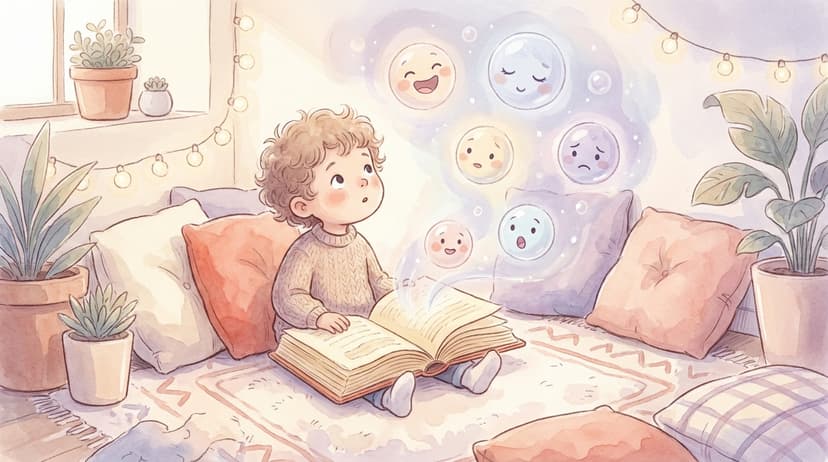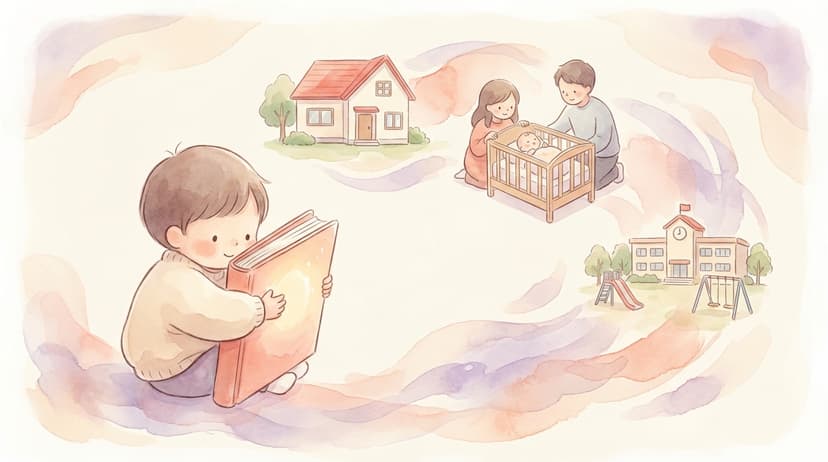
Bibliotherapy is the practice of using books to help children understand and process difficult emotions. Therapists have relied on it for decades. Parents can use it too — no training required. When your child reads about a character facing fear, grief, or anger and watches that character work through it, something shifts. The emotion goes from overwhelming to manageable. From nameless to named.
A 2022 meta-analysis published in Clinical Child Psychology and Psychiatry found that bibliotherapy interventions reduced children's anxiety symptoms by 25-30% and produced moderate-to-large positive effects on emotional adjustment. The strongest results came when parents read the books together with their child and talked about the content afterward.
What Is Bibliotherapy and Where Did It Come From?
The term bibliotherapy was coined in 1916 by Samuel Crothers in The Atlantic Monthly. But the idea is ancient. Greek libraries bore the inscription "healing place of the soul." In the 1930s, hospitals began prescribing reading alongside medicine. By the 1960s, child psychologists had formalized the practice for young patients dealing with grief, divorce, fear, and other life changes.
Today, bibliotherapy falls into two categories:
- •Clinical bibliotherapy — administered by a trained therapist as part of a treatment plan
- •Developmental bibliotherapy — used by parents, teachers, and caregivers to support children through everyday emotional challenges
This article focuses on the second kind. The kind you can start tonight.
Books are the quietest and most constant of friends. For children in emotional distress, a story provides what direct conversation often cannot — psychological distance. A child who won't talk about their own fear will talk about a character's fear. That opening is everything.
The beauty of developmental bibliotherapy is its simplicity. You don't need a degree. You need a book that mirrors your child's situation and the willingness to sit with them while they feel something.
How Does Bibliotherapy Work? The Three Stages
Researchers describe bibliotherapy as a three-stage process. Each stage builds on the last.
Stage 1: Identification. The child recognizes themselves in a character. "She feels scared too." "He doesn't want to go to the new school either." This recognition breaks isolation. The child discovers they are not the only person on earth who has felt this way. That alone is powerful.
Stage 2: Catharsis. As the character experiences and expresses emotions, the child releases their own. This is the moment they might cry during a story, squeeze your hand tighter, or go quiet. The character's emotional journey gives the child permission to feel — in a safe context, with you right there.
Stage 3: Insight. The child watches the character find a way through. Not a perfect fix. A way through. They absorb a model for coping. "The character was scared, and she was brave anyway." "He missed his old house, and he made a friend at the new one." The child begins to imagine their own version of "through."
25-30%
reduction in children's anxiety symptoms through bibliotherapy interventions
Source: Clinical Child Psychology and Psychiatry meta-analysis, 2022
These stages don't happen in one reading. They unfold across multiple sessions. This is why children ask for the same book over and over during hard times. They're not stuck. They're processing.
What Does the Research Say?
The evidence base for bibliotherapy is substantial and growing.
A 2019 meta-analysis by Jamilah Montgomery and Trina Mafnas at Loyola Marymount University reviewed 22 controlled studies and found that bibliotherapy produced significant improvements in children's emotional adjustment across anxiety, depression, behavioral problems, and social skills.
Key findings from the research:
- •Anxiety reduction: Children receiving bibliotherapy showed a 25-30% decrease in anxiety symptoms compared to control groups (Clinical Child Psychology and Psychiatry, 2022)
- •Grief processing: A University of Zurich study found that children who engaged in grief-focused bibliotherapy showed faster emotional recovery and fewer symptoms of prolonged grief disorder
- •Behavioral improvement: A 2021 Cambridge study found that children given book-based preparation for major transitions showed 40% fewer behavioral regression symptoms
- •Self-esteem: A randomized controlled trial published in The Journal of Pediatric Psychology found that bibliotherapy interventions targeting self-concept produced measurable gains in children's self-esteem within six weeks
Bibliotherapy works because it engages the same neural pathways as real experience — but with a crucial safety net. When a child reads about a character facing loss, the brain activates empathy networks and emotional processing regions. The child genuinely feels something. But they feel it while sitting in a parent's lap, which means they're co-regulated. That combination of emotional activation plus safety is the sweet spot for healing.
The most consistent finding across studies: bibliotherapy works best when it's interactive. A book read silently has some effect. A book read together, paused over, questioned, and connected to the child's own life has a much stronger one.
What Emotional Challenges Can Books Help With?
Bibliotherapy isn't limited to extreme situations. It works across a wide spectrum of childhood emotional challenges.
Grief and loss. The death of a grandparent, a pet, or a loved one. Books provide language for an experience that leaves most children — and many adults — speechless.
Divorce and family changes. Books normalize the confusing reality of two homes, new partners, and shifting routines. They address the guilt children carry ("Did I cause this?") without the parent needing to find the perfect words.
New sibling arrival. Jealousy, displacement, and fear of being replaced are hard emotions for a three-year-old to articulate. A character who feels the same things makes those emotions speakable.
Fear and anxiety. Fear of the dark, fear of storms, social anxiety, school refusal. Stories show children that fear is universal — and survivable.
Anger and frustration. Children who struggle with anger find relief in characters who feel rage and learn to manage it. The story provides a regulation script they can borrow.
Moving to a new home. Loss of friends, loss of the familiar, uncertainty about the unknown. For a detailed guide to books for big life transitions, see our dedicated article.
Bullying and social exclusion. Stories about characters who are teased, left out, or misunderstood help children feel less alone and model assertive responses.
40%
fewer behavioral regression symptoms in children given book-based preparation for major life transitions
Source: University of Cambridge, 2021
Why Are Personalized Stories Especially Powerful for Bibliotherapy?
Traditional bibliotherapy relies on the child identifying with a fictional character. That works. But there's a gap between "I relate to this character" and "this character is me."
Personalized stories close that gap.
When your child sees themselves — their face, their name, their world — as the protagonist working through a challenge, the three stages of bibliotherapy intensify. Identification isn't a stretch. It's automatic. Catharsis hits deeper because the emotional stakes feel personal. Insight lands harder because the child doesn't just watch someone else find courage. They watch themselves find it.
Research on the Mirror Effect supports this. A 2024 study from the National Literacy Trust found that children reading personalized stories showed 47% stronger emotional engagement than children reading generic versions of the same story. When the protagonist looks like the child, the brain processes the story as self-relevant — activating deeper emotional circuits.
📖 Bibliotherapy, made personal
Sherly creates personalized storybooks where your child's photo becomes custom illustrations across 30 pages. When the hero who faces a challenge and finds their courage literally is your child, the emotional lesson doesn't just land — it sticks. A child who sees themselves being brave in a story starts to believe they are brave in real life.
This is especially powerful for children who resist direct conversation about their feelings. A child who won't talk about being scared will talk about what happened in "their" book. The story becomes a bridge.
How to Choose the Right Book for Your Child
Not every book works for every child. Here's how to find the right match.
1. Match the situation, not the emotion. Look for a character facing the same situation your child faces — not just the same feeling. A child starting school needs a school story, not just a story about a nervous character.
2. Check the resolution. The character should work through the challenge in a realistic way. Avoid books where problems vanish magically. Children need to see that hard feelings take time to process — and that processing works.
3. Read it first. Preview every book before reading it with your child. Make sure the emotional content matches your child's readiness. A book about death that includes graphic descriptions might be too much for a four-year-old, even if the topic is right.
4. Match developmental level. A book that's too simple won't resonate. A book that's too complex will confuse. For guidance on matching books to your child's stage, see how to choose the right book for your child's reading level.
5. Let the child lead. If your child rejects a book, don't push. The refusal is data — they may not be ready, or the book may not be the right match. Try another.
How to Discuss a Book After Reading
The conversation after the story is where insight happens. Keep it gentle. Keep it open.
- •Start with the character, not the child. "How do you think she felt when that happened?" is safer than "How do you feel?"
- •Validate all emotions. If the child says the character was angry, don't correct to "sad." Accept their reading.
- •Connect when invited. If the child draws a connection to their own life, follow it. If they don't, don't force it.
- •Ask open questions. "What would you have done?" "What do you think happens next?" These invite reflection without pressure.
- •Let silence be okay. Sometimes a child processes by being quiet. Sitting together after a heavy story, saying nothing, is its own kind of conversation.
The most common mistake parents make with bibliotherapy is turning it into a lesson. The book is not a worksheet. It's a mirror. Your job is to hold the mirror steady and let the child see what they need to see. The conversation should follow the child's lead, not the parent's agenda.
A 2023 study from the University of Zurich confirmed this: the most effective parent-child bibliotherapy sessions were characterized by emotional responsiveness — the parent followed the child's cues rather than directing the conversation.
47%
stronger emotional engagement in children reading personalized stories compared to generic versions
Source: National Literacy Trust, 2024
When Should You Seek Professional Help?
Bibliotherapy is a tool, not a replacement for therapy. Consider professional support if:
- •Your child's emotional distress persists for more than a few weeks without improvement
- •They show significant changes in eating, sleeping, or social behavior
- •They express feelings of hopelessness or self-harm
- •The emotional challenge is severe (trauma, abuse, or complicated grief)
- •Your own emotional response to the situation makes it hard to be the calm co-reader
A therapist trained in clinical bibliotherapy can select targeted texts and guide deeper processing than developmental bibliotherapy alone.
For most everyday emotional challenges — a new sibling, a best friend moving away, the first day of school, the loss of a pet — you have everything you need. A good book. Your presence. Your willingness to sit with your child in the hard feelings without rushing to fix them.
That's bibliotherapy. And you can start tonight.
Ready to create your child's story?
Turn your child into the hero of a 30-page illustrated hardcover book. Upload a photo and see the magic.
Frequently Asked Questions
Sherly Team
Children's Reading Specialists