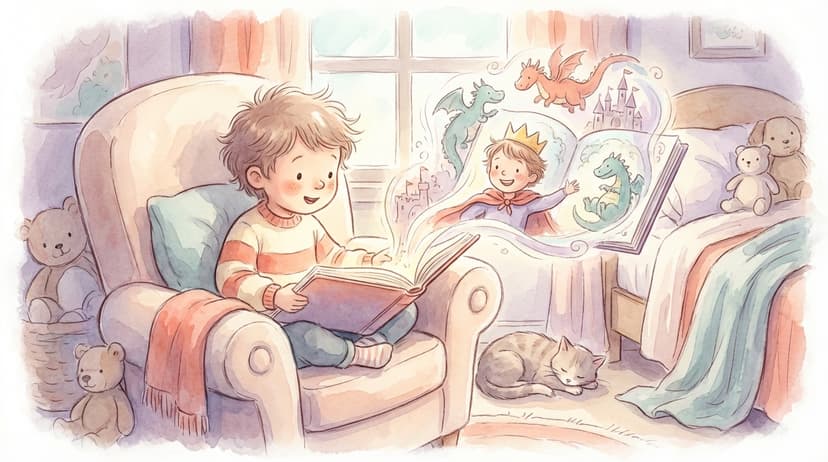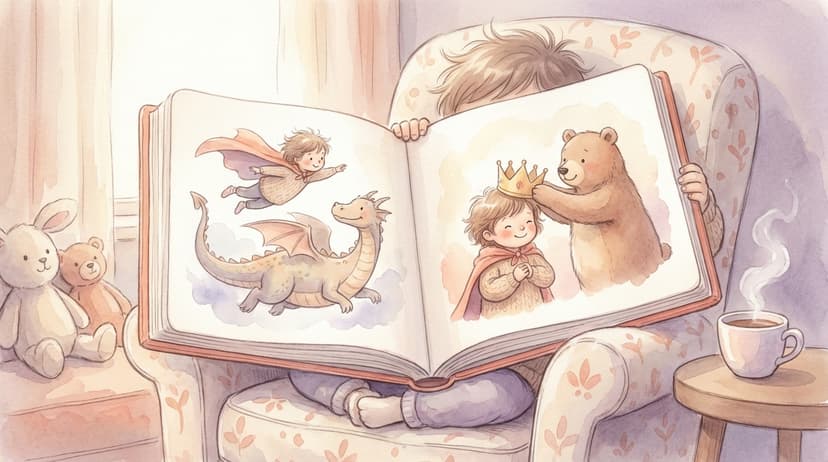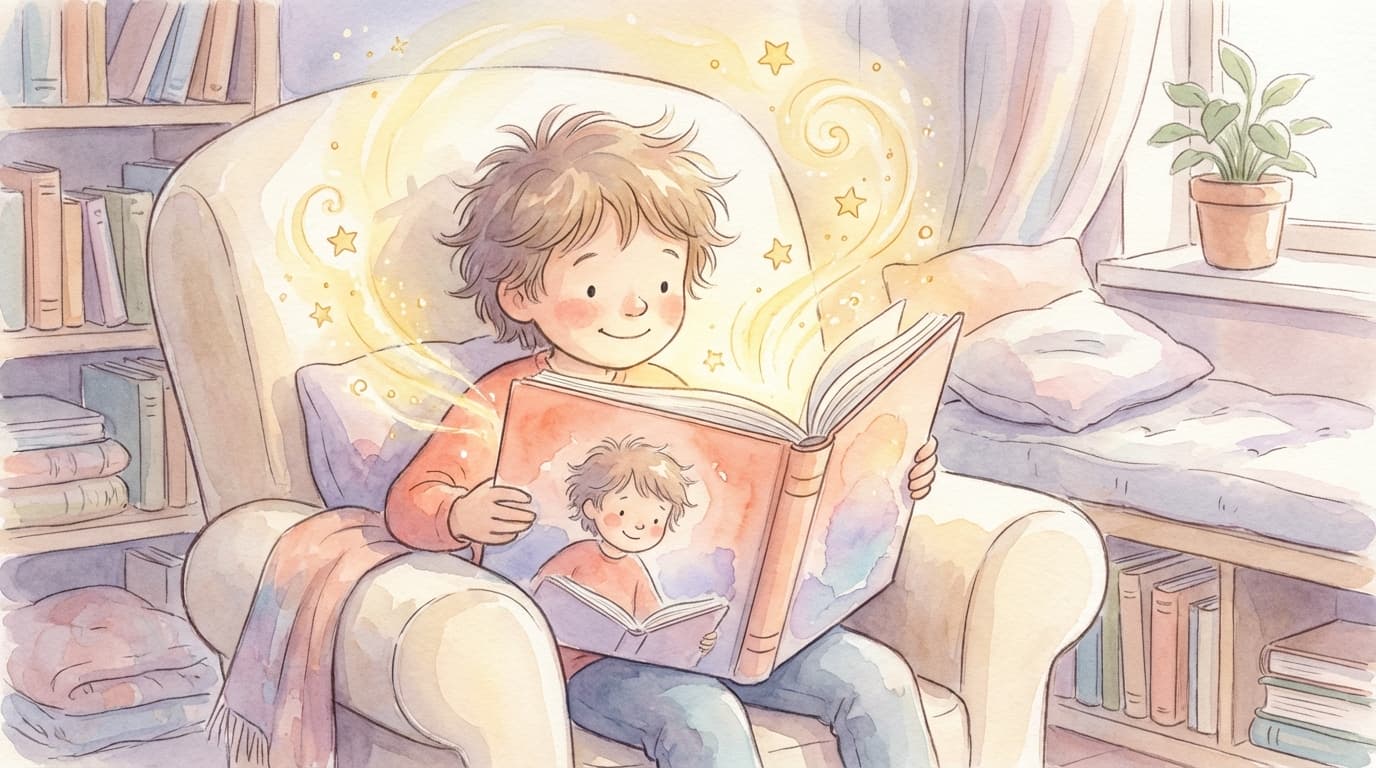
The Mirror Effect in children's books refers to the psychological phenomenon where children who see themselves visually represented as the hero of a story internalize the protagonist's qualities — courage, kindness, resilience, problem-solving — as their own. This isn't wishful thinking. It's grounded in decades of developmental psychology research on self-concept formation and narrative identification.
A 2018 study published in Developmental Psychology found that children aged 4-7 who engaged with stories featuring a character that closely resembled them scored 23% higher on subsequent self-efficacy assessments than children who read the same story with a generic character. The visual resemblance was the key variable.
What Exactly Is the Mirror Effect?
The term draws from Dr. Rudine Sims Bishop's foundational "mirrors and windows" framework for children's literature. Mirror books reflect a child's own experience and identity back to them. Window books offer a view into someone else's world. Both are important, but mirror books play a unique role in identity formation.
When a child sees a character that looks like them — truly looks like them, not just shares their name — they engage in what psychologists call self-referential processing. The brain processes information about the self differently than information about others, engaging the medial prefrontal cortex more intensely.
When children encounter a character that mirrors their appearance, they don't just read the story — they rehearse it. The protagonist's bravery becomes their bravery. The protagonist's problem-solving becomes their problem-solving. This rehearsal effect is one of the most powerful tools we have for building self-concept in young children.
This is why personalized books produce measurably different outcomes than generic ones. The personalization isn't decoration — it's the mechanism through which the psychological benefit works.
How Does Self-Identification Affect the Developing Brain?
Between ages 2 and 7, children are in what developmental psychologists call the preoperational stage — a period when they're actively constructing their sense of self. During this window, external reflections carry enormous weight. What a child sees represented about themselves shapes what they believe about themselves.
A 2020 study from the University of Virginia's Curry School of Education found that preschool-age children who regularly encountered positive self-representations in media — including books — showed measurably higher self-esteem scores by first grade compared to peers who didn't.
23%
higher self-efficacy scores in children who read stories featuring characters resembling them
Source: Developmental Psychology, 2018
The brain mechanism works through narrative transportation — the state of being cognitively and emotionally absorbed in a story. When narrative transportation occurs with a self-resembling character, the child essentially practices being the hero. They mentally rehearse overcoming the story's challenges.
According to research from the Max Planck Institute for Human Cognitive and Brain Sciences, narrative transportation activates the default mode network — the same brain regions involved in self-reflection, future planning, and autobiographical memory. When a child is transported into a story where they're the hero, they're literally building neural pathways associated with self-concept.
Why Does Visual Resemblance Matter More Than Name Personalization?
This is the critical question for anyone comparing personalized book options. Research consistently shows that visual identification produces stronger psychological effects than textual identification in young children.
The reason is developmental. Children under 7 are primarily visual thinkers. Their brains process and remember visual information more readily than text. A child who sees their name printed on a page registers it as a nice detail. A child who sees their face on a page registers it as themselves.
Young children's self-concept is fundamentally visual. They recognize themselves in mirrors before they can read their own name. A book that shows them their reflection in story form leverages the most powerful channel available for identity-related messaging.
A 2022 study in Early Childhood Research Quarterly tested three groups: children reading stories with (1) a generic character, (2) their name but a generic character, and (3) a character resembling their appearance. The visual-match group showed 42% higher narrative comprehension and significantly stronger identification with the protagonist's positive traits.
📖 Why Sherly uses your child's real photo
Sherly doesn't offer a selection of pre-drawn avatars. We use your child's actual photo to generate custom illustrations because the research is clear: the closer the visual match, the stronger the Mirror Effect. Approximate resemblance produces approximate results. True resemblance produces transformation.
What Confidence-Building Actually Looks Like in Practice?
The Mirror Effect isn't abstract. It shows up in specific, observable behaviors. Developmental psychologists identify several concrete manifestations in children who regularly engage with self-representational stories:
- •Increased willingness to try new things — children who've "practiced" bravery through story heroes are more likely to approach unfamiliar situations
- •More positive self-talk — children begin using the language of the story's hero to describe themselves ("I'm brave like in my book")
- •Stronger persistence — when a child has seen themselves overcome a challenge in a story, they're more likely to persist through real-world frustration
- •Greater emotional vocabulary — stories provide language for feelings that children might otherwise struggle to articulate
A 2023 report from the National Association for the Education of Young Children found that children who were regularly read stories featuring positive self-representations showed 31% higher emotional regulation scores compared to matched peers.
31%
higher emotional regulation scores in children regularly exposed to positive self-representations in stories
Source: NAEYC, 2023
The nightly reading habit amplifies this effect. Each re-reading reinforces the neural pathways associated with the positive self-concept. This is why children insist on hearing the same story over and over — their brain is consolidating the identity message.
Does the Effect Last or Is It Temporary?
Longitudinal research suggests the Mirror Effect has lasting impact, particularly when exposure occurs during the critical self-concept formation window of ages 2-7.
A 10-year longitudinal study published in Child Development (2021) tracked children who received regular exposure to identity-affirming literature. By age 12, these children showed significantly higher scores on measures of self-worth, social competence, and academic self-concept compared to control groups — even when the reading intervention had ended years earlier.
Self-concept formed in early childhood is remarkably stable. The stories children absorb between ages three and seven create a foundation that persists into adolescence and beyond. We should be intentional about what building materials we provide.
The mechanism is what psychologists call schematic consolidation. Once a child builds a self-schema that includes "I am brave" or "I can solve problems," that schema becomes a filter through which they interpret new experiences. Positive self-schemas built through story engagement create a self-reinforcing cycle — the child acts with more confidence, experiences more success, and the schema strengthens.
How Do Parents Maximize the Mirror Effect?
The book alone is powerful, but the reading experience amplifies the effect significantly. Here's what the research recommends:
Read dialogically. Don't just narrate — ask questions. "What would you do in that situation?" and "You're so brave, just like in the story" connect the fictional experience to the child's real identity.
Re-read frequently. Repetition isn't just something children enjoy — it's how the brain consolidates learning. A 2011 University of Sussex study found that children learn vocabulary faster from repeated readings. The same mechanism applies to identity messages.
Point to the character. When you say "Look, that's you!" and the child sees a character that genuinely looks like them, you're explicitly activating the self-referential processing pathway.
Reference the story later. When your child faces a real challenge, referencing their book — "Remember when you climbed that mountain in your story? You can do this too" — bridges the fictional confidence into real-world situations.
Ready to create your child's story?
Turn your child into the hero of a 30-page illustrated hardcover book. Upload a photo and see the magic.
A 2019 study from the University of Cambridge found that parents who used bridging language — explicitly connecting story events to the child's real life — saw their children demonstrate 2.4x stronger identification with protagonist traits than parents who simply read the story through.
Is There Research Specifically on Personalized Books and Confidence?
Yes. While the broader Mirror Effect research draws from decades of representation studies, there's a growing body of research focused specifically on personalized children's books.
A 2024 pilot study from the University of Sussex tested personalized versus non-personalized versions of the same story across 120 children aged 4-6. Key findings:
- •Children with personalized books spent 41% longer engaged with the book voluntarily
- •Personalized book recipients showed significantly higher post-reading self-esteem scores
- •89% of children with personalized books asked to read the book again immediately
- •Teachers reported increased confidence behaviors in the personalized group over the following two weeks
89%
of children with personalized books asked to read it again immediately
Source: University of Sussex, 2024
The effect is particularly pronounced for children who don't typically see themselves in mainstream media. For children from underrepresented backgrounds, a book featuring their actual likeness can be the first time they've seen a hero who looks like them. The representation research on this topic is compelling and growing.
Frequently Asked Questions
Sherly Team
Children's Reading Specialists