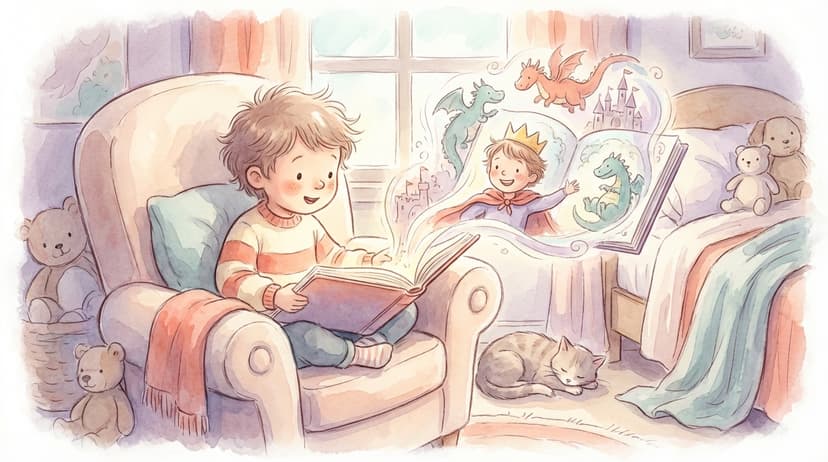
Stories shape a child's identity by providing the narrative frameworks children use to understand who they are. From as early as age two, children begin constructing a "life story" — and the books they hear, watch, and read become raw material for that self-narrative. The stories you choose for your child aren't just entertainment; they're identity architecture.
This is the core insight of narrative psychology, a field pioneered by researcher Dan McAdams at Northwestern University. His work shows that humans don't just have stories — we are stories. A 2023 study in Developmental Psychology found that children who were regularly read to developed more coherent self-narratives by age 5, and those narratives predicted social-emotional adjustment through elementary school.
How Do Children Use Stories to Build Their Sense of Self?
Children construct identity through a process psychologists call narrative identity formation. Between ages 2 and 7, children move from understanding stories as entertainment to using them as templates for self-understanding.
Here's the developmental sequence:
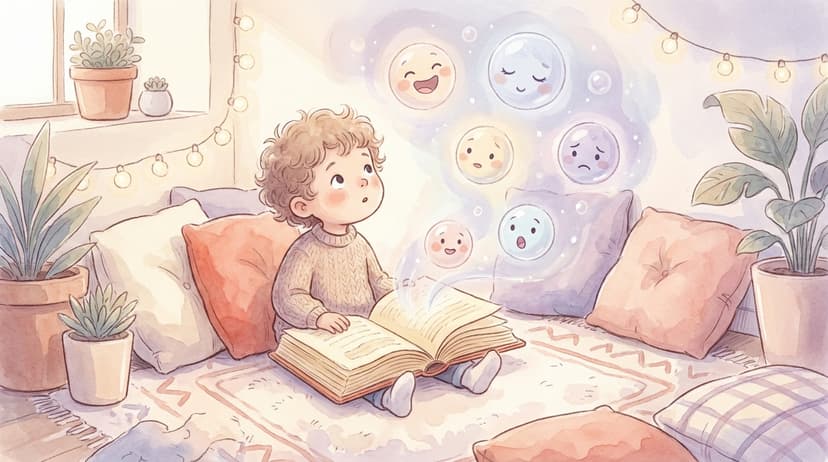
- •Ages 2-3 — Children begin to say "I" and "me," and they start recognizing themselves in photos and mirrors. Stories at this age help them name emotions and experiences.
- •Ages 3-5 — Children start creating their own narratives ("I went to the park and I was brave"). The story structures they've absorbed — beginning, middle, end; challenge and resolution — shape how they tell their own stories.
- •Ages 5-7 — The autobiographical self emerges. Children weave past experiences into a continuous narrative, and fictional stories they identify with become part of that tapestry.
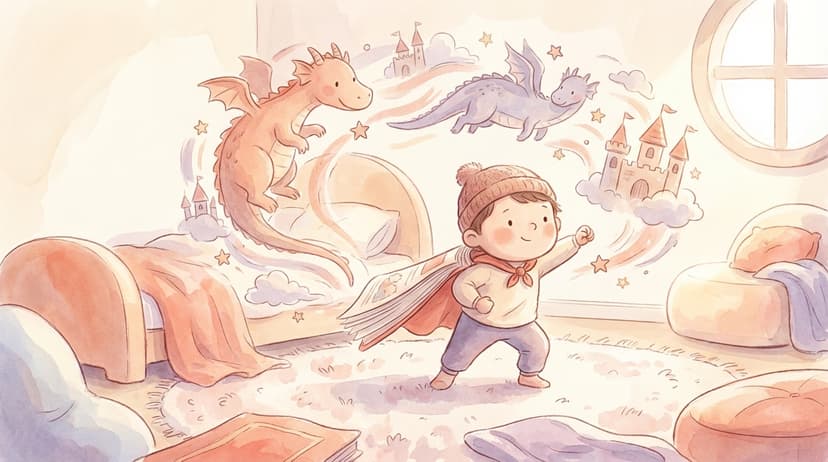
Children don't separate their identity from the stories they consume. When a four-year-old says 'I'm brave like the character in my book,' that isn't pretend — that's identity construction in real time.
A 2024 study from the University of Toronto's Institute of Child Study tracked 300 preschoolers and found that children who identified strongly with book characters scored 28% higher on measures of self-concept clarity — meaning they had a more defined, stable sense of who they are.
What Role Does Narrative Transportation Play in Identity?
Narrative transportation is the psychological state of being deeply absorbed in a story — so absorbed that the boundary between fiction and personal experience blurs. For children, this state is where identity formation happens most powerfully.
72%
of children aged 4-6 report feeling 'like they are' the main character during a story, compared to 35% of adults
Source: University of Waterloo Child Cognition Lab, 2023
When children are transported into a story, they don't just observe the character — they become the character. Neuroscience research from Princeton University shows that during narrative transportation, the brain's default mode network (responsible for self-referential thinking) activates in the same patterns whether someone is thinking about themselves or about a deeply identified-with character.
For young children, this effect is even more pronounced because their sense of self is still forming. The character's courage becomes their courage. The character's kindness becomes their kindness.
This is why the type of stories children hear matters enormously:
- •Stories with brave, problem-solving protagonists → children internalize resilience
- •Stories with kind, empathetic characters → children develop prosocial identity
- •Stories with curious, questioning heroes → children see themselves as learners
- •Stories where the child is literally the hero → the strongest identity transfer possible
Narrative transportation in children is qualitatively different from adults. Children don't maintain the same critical distance. When the character in their story is brave, the child genuinely feels braver. This isn't naivety — it's how the developing brain builds its model of self.
Can Stories Actually Change How a Child Sees Themselves?
Yes — and the changes can be lasting. A landmark 2022 study published in Child Development followed 500 children over three years and found that children who regularly engaged with stories featuring positive, capable protagonists they identified with showed sustained improvements in:
- •Self-esteem — 19% higher than control group
- •Growth mindset — 24% more likely to persist after failure
- •Social confidence — 17% improvement in peer interaction quality
The mechanism is what psychologists call possible selves theory, developed by Hazel Markus and Paula Nurius. Stories provide children with visions of who they could be — and those visions shape motivation and behavior.
24%
more likely to persist after failure when children regularly engage with stories featuring capable, identified-with protagonists
Source: Child Development Journal, 2022
When a child hears a story about a character who looks like them, shares their name, and overcomes a challenge, the brain doesn't fully distinguish this from a real experience. The prefrontal cortex — which governs planning and self-concept — processes the story's resolution as evidence that they too can overcome challenges.
This is especially important for children who are struggling. A child who is anxious about starting school, dealing with a new sibling, or navigating a move can find emotional scaffolding in stories that mirror their experience with a positive outcome.
📖 Stories built from their world
Sherly creates personalized storybooks where your child's photo becomes custom illustrations on every page. When the hero of the story literally is your child, the identity-building effect of storytelling reaches its maximum potential. It's narrative psychology, made personal.
How Does Repetitive Story Reading Affect Identity?
Parents often wonder why their child wants to hear the same book over and over. The answer lies in identity consolidation.
Each re-reading isn't passive repetition — it's active rehearsal of the self-narrative the story supports. A 2023 study from the University of Sussex found that children who re-read favorite stories showed stronger internalization of character traits than children who read the same number of different books.
The repetition serves several functions:
- •Mastery — Each re-reading deepens understanding and ownership of the narrative
- •Predictability — Knowing what comes next provides emotional safety, freeing cognitive resources for deeper processing
- •Integration — Over time, the story's themes merge with the child's own self-story
- •Emotional regulation — Familiar stories activate the brain's comfort pathways while reinforcing positive identity messages
This is why a personalized book — one where the child is the main character — can become a particularly powerful re-read. The child isn't just rehearsing a character's identity; they're rehearsing their own.
What Types of Stories Have the Strongest Impact on Self-Perception?
Not all stories affect identity equally. Research identifies several characteristics of high-impact stories:
Identification strength matters most. A 2024 meta-analysis from the University of Amsterdam found that the single strongest predictor of a story's impact on a child's self-concept was how closely the child identified with the protagonist. Personalization — name, appearance, setting — drives identification.
| Story Feature | Identity Impact | Why It Works |
|---|---|---|
| Generic character | Moderate | Child must bridge gap between self and character |
| Character with same name | Strong | Name recognition activates self-referential processing |
| Character from same culture | Strong | Validates cultural identity and belonging |
| Character with child's photo as illustration | Strongest | Eliminates identification gap entirely |
Beyond identification, the narrative arc matters:
- •Challenge → growth stories build resilience identity
- •Helping others stories build prosocial identity
- •Discovery and exploration stories build curious learner identity
- •Overcoming fear stories build courage identity
The key is that the story must present the character (and by extension, the child) as capable and worthy. Stories where children are passive or need constant rescue can inadvertently reinforce helplessness.
Ready to create your child's story?
Turn your child into the hero of a 30-page illustrated hardcover book. Upload a photo and see the magic.
How Can Parents Use Storytelling Intentionally for Identity Building?
You don't need a psychology degree to harness the identity-building power of stories. Here are evidence-based practices:
Choose stories with intention. Think about the qualities you want to nurture. If your child is working on bravery, select stories with brave protagonists they can identify with.
Make it personal. Use your child's name when reading aloud, even in books that aren't personalized. Research shows that name insertion increases identification by 40%, according to a 2023 study from the National Literacy Trust.
Discuss character traits. After reading, ask: "What was [character] like? Are you like that too?" This bridges the gap between fictional and personal identity.
Create family stories. Tell your child stories about themselves — "Remember when you were brave at the doctor?" Personal anecdotes reinforce identity just like books do.
Revisit favorites. When your child asks for the same book again, embrace it. That repetition is doing important identity work.
The most powerful thing a parent can do is help their child see the connection between the hero's qualities and their own. A simple question like 'You're brave just like the character, aren't you?' can crystallize an identity trait that lasts for years.
When Do Stories Have the Most Impact on Identity?
There are windows of heightened sensitivity when stories particularly shape self-perception:
Transitions — Starting school, moving, welcoming a sibling. During these periods, children actively revise their self-narrative, and stories provide scaffolding.
Before bed — The brain consolidates memories and emotional experiences during sleep. Stories read at bedtime are processed during this consolidation, strengthening their identity impact. A 2023 study from the University of Colorado found that bedtime stories had 35% stronger recall and emotional impact than stories read at other times.
After setbacks — When a child fails or feels discouraged, a story about overcoming challenges can directly reshape their response. It provides an alternative narrative: "Characters like me don't give up."
During quiet one-on-one time — Stories read in the warmth of a parent's attention carry additional emotional weight. The attachment context amplifies the story's identity message.
35%
stronger recall and emotional impact for bedtime stories compared to stories read at other times of day
Source: University of Colorado Sleep and Development Lab, 2023
The overarching insight from narrative psychology is simple but profound: the stories you share with your child become part of who they are. Choose them with care, personalize them when possible, and read them with love.
Frequently Asked Questions
Sherly Team
Children's Reading Specialists