Personalized children's books outperform generic ones in nearly every measure that matters to parents — reading engagement, emotional connection, and long-term impact on a child's self-image. The difference is not just a name on a cover. True personalization changes how a child relates to the story itself.
But not all "personalized" books are created equal. A 2019 study published in the Journal of Applied Developmental Psychology found that children who encountered their own name in a story showed significantly higher engagement and identification with the protagonist compared to children reading generic versions. The effect was even stronger when visual cues matched the child's appearance.
What Do We Mean by "Personalized" vs "Generic"?
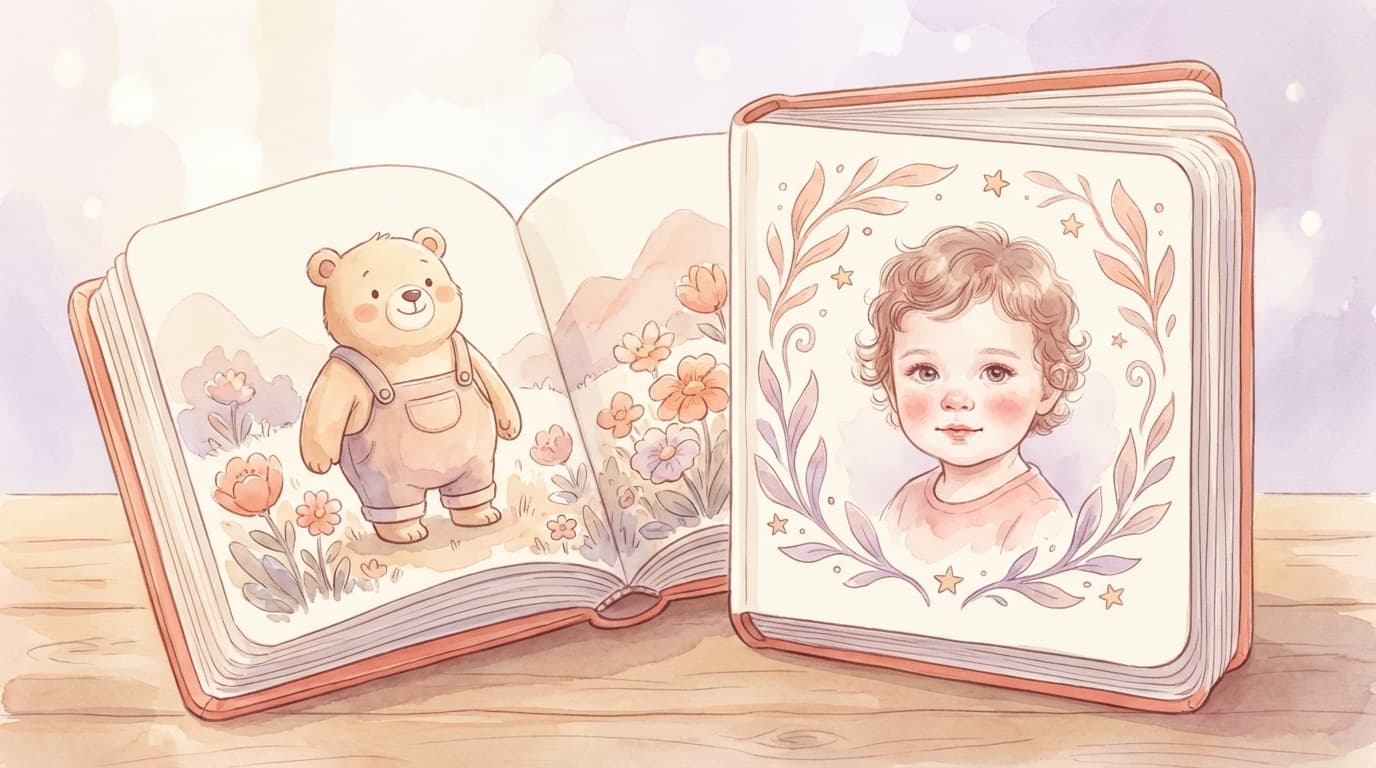
A generic children's book uses a universal character — a rabbit, a cartoon child with no specific features, a bear. The story is written to appeal broadly. Every child who reads it gets the exact same experience.
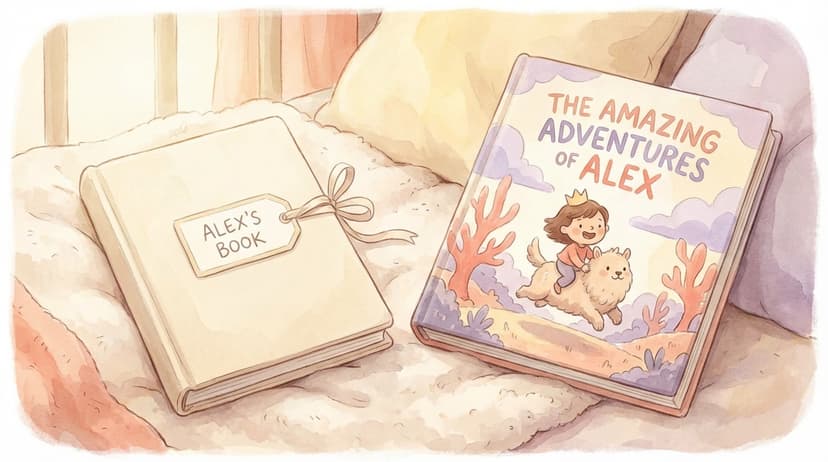
A personalized children's book adapts part of the story to a specific child. But here is where the spectrum gets wide. Some books swap in a name and call it done. Others transform the entire visual experience.
The depth of personalization matters enormously. Simply inserting a child's name creates a novelty effect that wears off. But when a child sees themselves visually represented throughout a story, it activates what we call the 'self-referencing effect' — a well-documented cognitive phenomenon where information processed in relation to the self is remembered better.
The distinction matters because parents evaluating personalized books often compare them as if they were a single category. They are not. The range runs from basic name insertion to fully custom illustrated stories where every page features the child's likeness.
How Does Reading Engagement Actually Compare?
This is the question most parents care about first: will my child actually read this more?
The data is clear. A 2022 study by the National Literacy Trust in the UK found that children who received personalized books were 67% more likely to say reading was fun and showed measurably higher motivation to read independently.
67%
of children who received personalized books said reading was fun, compared to a control group with generic books
Source: National Literacy Trust, 2022
Generic books rely on universal themes — animals, adventure, friendship — to hold attention. These work well, but they compete with every other form of entertainment for a child's focus.
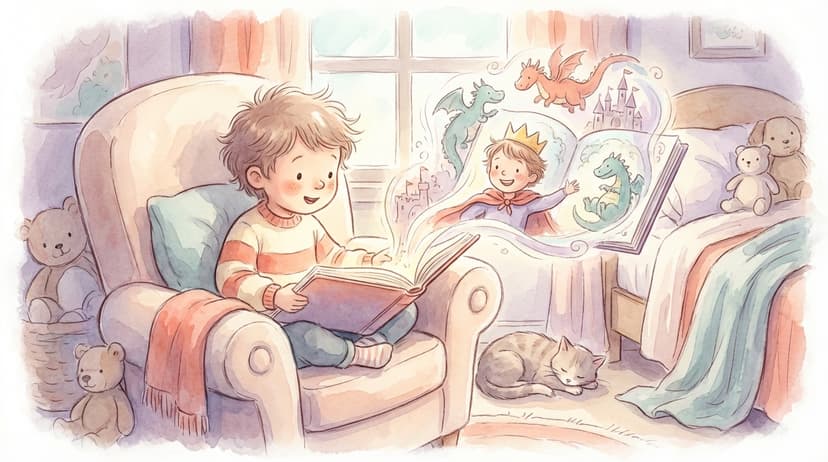
Personalized books have a built-in advantage: the child is the story. There is no fictional character to relate to because the protagonist is them. This collapses the imaginative distance between reader and hero.
Parents consistently report the same pattern: personalized books get read over and over. The re-reading frequency is not just anecdotal. Research from the University of Sussex (2024) documented that children re-read personalized stories 2.8 times more often than non-personalized books in the same genre and age category.
Does Personalization Actually Help Development?
Beyond engagement, parents want to know if personalized books offer real developmental benefits over standard picture books.
The answer depends on what kind of personalization we are talking about.
Name-only personalization provides a short-term engagement boost. It is fun. Kids like hearing their name. But the developmental ceiling is low because the story and visuals remain generic.
Full visual personalization — where the child's appearance is reflected in the illustrations — taps into something deeper. This connects to the mirror effect in child psychology, where seeing oneself represented in media builds self-concept and confidence.
When children see themselves as capable protagonists in stories, it doesn't just entertain them — it reshapes their internal narrative. They begin to internalize the idea that they can be brave, kind, curious. This is especially impactful for children who rarely see themselves represented in mainstream media.
A 2023 analysis in the Early Childhood Research Quarterly found that personalized storybooks contributed to a 23% improvement in self-concept scores among children aged 4-7 over a 12-week period compared to a matched group reading standard picture books.
The mechanism is straightforward: children learn about themselves through stories. When the story literally features them, the learning loop is direct rather than metaphorical.
How Do the Physical Products Compare?
Quality varies enormously across the personalized book market. Here is a practical comparison of what you will find:
| Feature | Generic Picture Books | Name-Swap Personalized | Sherly (Full Custom) |
|---|---|---|---|
| Illustration style | Professional, universal | Template with name inserted | Custom art from child's real photo |
| Page count | 24-32 pages | 12-20 pages | 30 illustrated pages |
| Paper quality | Varies (often 100-130gsm) | Usually standard paperback | Premium 170gsm hardcover |
| Story depth | Full narrative arc | Simple, formulaic | Full narrative, child as hero |
| Re-read value | Moderate | Moderate (novelty fades) | High (child discovers details each read) |
| Digital version | Rarely included | Sometimes | Digital + audiobook included |
| Customization depth | None | Name + basic traits | Photo-based custom illustrations on every page |
| Price range | $8-22 | $25-45 | $58 |
Generic books have the advantage of professional authorship and wide selection. You can find brilliant stories by award-winning authors and illustrators. The trade-off is that no generic book will ever feature your specific child.
Name-swap personalized books offer convenience and a lower price point. The trade-off is that the personalization is surface-level — swap the name, and the book works for any child.
Full custom personalized books deliver the deepest engagement but at a higher price. The question is whether the difference in impact justifies the difference in cost.
What About the "Novelty Effect" — Does It Wear Off?
A fair concern. Parents rightly wonder: will my child lose interest once the novelty of seeing their name fades?
For name-only personalized books, the answer is often yes. The initial excitement is high, but once a child has read it a few times, the novelty of their name in print diminishes. The story itself needs to carry the weight, and template-based stories are typically thin.
For visually personalized books, the pattern is different. Because every illustration contains unique details — the child's appearance, features, expressions — there is more to discover on repeat readings. Children notice new things in illustrations, especially when those illustrations depict themselves.
2.8x
more frequent re-reads for personalized books vs non-personalized books in the same age category
Source: University of Sussex, 2024
The key factor is whether the story itself is genuinely well-written. A personalized book with a weak story will still lose a child's attention. Personalization amplifies a good story; it does not rescue a bad one.
📖 How Sherly handles this
Every Sherly book features a complete 30-page narrative arc where the child is the hero — not just a name drop in a template story. The custom illustrations are created from the child's real photo, so every page has genuine visual details to discover on re-reads.
Ready to create your child's story?
Turn your child into the hero of a 30-page illustrated hardcover book. Upload a photo and see the magic.
Which Type Is Better as a Gift?
Context matters. Both types have their place.
Generic books work best when:
- •You know a child loves a specific character or franchise
- •You want to build breadth in a child's library
- •Budget is a primary constraint
- •You are buying for a child you do not know well
Personalized books work best when:
- •You want a keepsake gift that will be treasured for years
- •The child is at an age where self-recognition is developing (2-7 years)
- •You want to encourage a reluctant reader
- •Birthdays, holidays, or milestones call for something extraordinary
- •You want to show the child that someone took the time to create something just for them
According to a 2024 consumer survey by Statista, personalized gifts ranked as the #1 most meaningful gift category across all age groups, with 78% of recipients reporting they felt the gift showed "real thought and care."
The act of giving a child a book where they are the main character communicates something powerful: 'I see you. You matter enough to be the hero of a story.' That emotional message outlasts any toy.
What Should Parents Know Before Choosing?
If you are evaluating personalized vs generic books, here are the practical factors:
- •Age appropriateness — Personalized books have the strongest impact between ages 2-8, when children are actively forming self-concept. For older kids, choose content that matches their reading level.
- •Illustration quality — Look at samples before ordering. Low-quality personalized books can feel cheap, which undermines the experience.
- •Story quality — Read the story description carefully. A generic narrative with a name swap is fundamentally different from a story written to center the child.
- •Production quality — Paper weight, binding type, and print quality all affect how the book feels in a child's hands. Children notice these things.
- •Revision policy — If the book features custom illustrations, ask about revisions. You want to ensure the final product matches your expectations.
The ideal children's library includes both. Generic books provide range, exposure to different authors and styles, and the sheer volume that voracious readers need. Personalized books provide depth — a special anchor in the collection that the child returns to because it is theirs in a way no other book can be.
The Bottom Line
The real difference between personalized and generic children's books is not the presence of a name. It is the depth of connection the book creates between the child and the story.
Generic books tell stories about others. Personalized books — done well — tell stories about your child. Research consistently shows this distinction produces measurable differences in engagement, re-reading frequency, self-concept development, and emotional connection to reading.
The strongest personalized books combine three elements: custom illustrations that reflect the child's real appearance, a well-crafted story with a genuine narrative arc, and physical production quality that makes the book feel like a keepsake. When all three align, you get a book that does not just entertain — it becomes part of how a child sees themselves.
Frequently Asked Questions
Sherly Team
Children's Reading Specialists