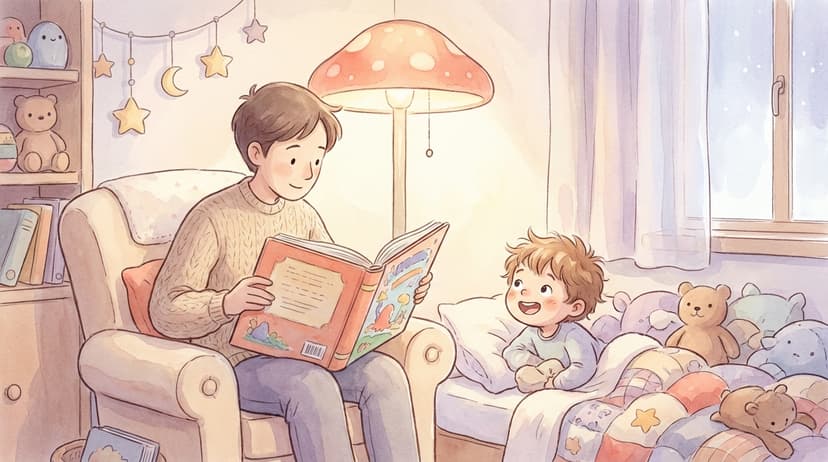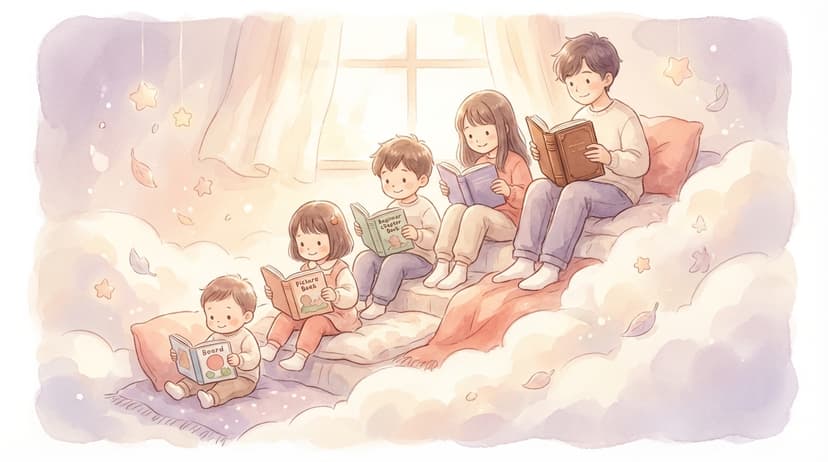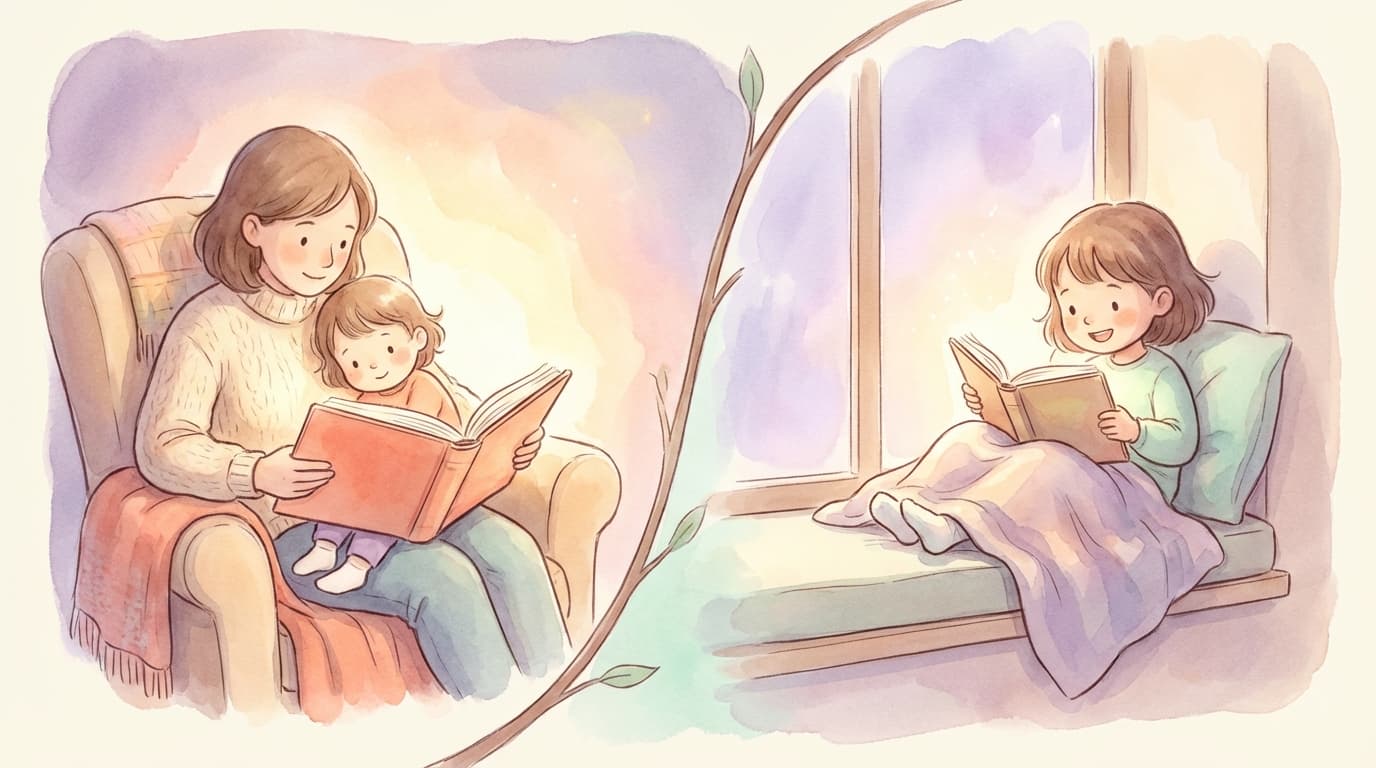
Both reading aloud and independent reading matter — but they build different skills. Reading aloud develops listening comprehension, vocabulary, and emotional connection. Independent reading builds decoding, fluency, and autonomy. They are not interchangeable, and your child needs both. The biggest mistake parents make? Stopping read-alouds the moment their child can read on their own.
Here's the fact that changes everything: according to the American Academy of Pediatrics, a child's listening comprehension exceeds their reading comprehension until approximately age 13. That means your eight-year-old who reads chapter books alone can still understand far more complex language, ideas, and stories when you read to them. Dropping read-alouds at age six or seven leaves years of cognitive growth on the table.
Why Do Parents Stop Reading Aloud Too Early?
It feels logical. Your child picks up a book, sounds out the words, turns the pages. They can read. Mission accomplished.
But reading independently and understanding deeply are two different things. A child who can decode "The explorer navigated treacherous terrain" may not grasp what "treacherous terrain" means. When you read that sentence aloud, you pause. You explain. You connect it to the hike you took last summer. That interaction is where comprehension grows.
A 2017 survey by Scholastic found that the percentage of parents who read aloud to their children drops sharply after age five — from 83% of parents with children ages three to five, down to just 17% of parents with children ages nine to eleven. The very years when read-alouds provide some of their greatest benefits.
Children can listen to and understand stories that are well beyond what they can read on their own. When we stop reading aloud because a child can decode, we confuse word-calling with comprehension. They are not the same thing.
The decline isn't because read-alouds stop working. It's because parents assume they're no longer needed. That assumption costs children years of vocabulary growth, complex thinking, and — perhaps most importantly — the irreplaceable bonding that shared reading provides.
What Does Reading Aloud Build That Independent Reading Can't?
Reading aloud and independent reading activate different neural pathways. Understanding the distinction helps you see why both are essential — and why one can never fully replace the other.
Reading aloud builds:
- •Listening comprehension — The ability to process and understand spoken language at levels far above independent reading ability
- •Advanced vocabulary — Children hear words in context they wouldn't encounter in books at their own reading level
- •Prosody and expression — Your voice teaches them how language sounds when it carries meaning, emotion, and emphasis
- •Attention span for complex narrative — Longer, richer stories than they could sustain independently
- •Emotional connection — Shared experience that deepens the parent-child bond in ways solo reading cannot
Age 13
when reading comprehension finally catches up to listening comprehension
Source: American Academy of Pediatrics
When you read Charlotte's Web to a six-year-old, they absorb vocabulary like "salutations," "radiant," and "humble" — words they won't encounter in early readers. They process the theme of mortality. They feel the grief of loss alongside you. None of that happens with a Level D book they read alone.
What Does Independent Reading Build That Read-Alouds Can't?
Independent reading develops a different — and equally critical — set of skills. These are abilities that require the child to do the cognitive work themselves, without your voice as scaffolding.
Independent reading builds:
- •Decoding — The mechanics of turning letters into sounds into words (only learned through print)
- •Fluency — Speed, accuracy, and automaticity that come from sustained solo practice
- •Self-regulation — Choosing to focus, pacing themselves, re-reading confusing passages
- •Reading stamina — The ability to sustain attention through increasingly longer texts
- •Autonomy and identity — The powerful sense of "I am a reader" that comes from doing it yourself
Independent reading is where children build the muscle of literacy. They learn to self-monitor, to push through difficulty, to choose what engages them. These metacognitive skills — knowing when you don't understand and what to do about it — only develop through solo practice.
A child who is only read to but never reads independently will struggle to build fluency. A child who only reads independently but is never read to will plateau in vocabulary and comprehension. The research is clear: the combination produces the strongest readers.
How Do the Two Compare Side by Side?
The differences aren't about better or worse. They are about different cognitive work serving different developmental purposes.
| Skill Area | Reading Aloud | Independent Reading |
|---|---|---|
| Vocabulary exposure | Above child's reading level | At or below reading level |
| Comprehension type | Listening (higher capacity) | Reading (developing) |
| Decoding practice | None — adult does it | Primary way decoding grows |
| Fluency building | Models fluent reading | Builds personal fluency |
| Emotional bonding | Strong — shared experience | Minimal — solo activity |
| Autonomy | Adult-directed | Child-directed |
| Attention span | Extended by adult support | Limited to child's stamina |
| Best for ages | Birth through 13+ | 5+ (once decoding begins) |
Notice the pattern. Reading aloud stretches up — exposing children to language and ideas beyond their current ability. Independent reading builds out — strengthening the skills they already have through practice and repetition. Growth happens in both directions.
The Social-Emotional Benefits That Only Shared Reading Delivers
This is the part that gets overlooked when we talk about literacy. Reading aloud isn't just a cognitive exercise. It's one of the most powerful bonding rituals available to families.
When you read together, you share emotional experiences in real time. You laugh at the same jokes. You feel tension during the same scenes. You discuss characters' choices and connect them to your child's life. This co-regulation of emotion — experiencing feelings together and processing them in conversation — is something independent reading simply cannot replicate.
A 2018 study from the Murdoch Children's Research Institute in Australia tracked over 2,000 families and found that parent-child reading at ages six and seven predicted better social-emotional functioning at ages ten and eleven — above and beyond the literacy benefits. The children who were still being read to at school age showed stronger empathy, better emotional regulation, and fewer behavioral problems years later.
2-4x
greater vocabulary growth when new words are encountered during read-alouds vs. independent reading
Source: Journal of Educational Psychology, 2019
Independent reading builds self-reliance. That matters. But shared reading builds the relational foundation that makes children feel secure enough to take on challenges — including the challenge of reading harder books on their own.
Age-by-Age Guide: How to Balance Read-Alouds and Independent Reading
The ratio shifts as your child grows, but the read-aloud never drops to zero. Here's how to think about the balance at each stage.
Ages 0-4 (Pre-reader):
- •Read-alouds: 100% — This is all reading at this stage
- •Focus: Build vocabulary, print awareness, love of stories
- •Time: 10-20 minutes daily, multiple short sessions
- •Your voice is their only access to the world of books
Ages 4-6 (Emerging reader):
- •Read-alouds: 80% | Independent: 20%
- •Focus: Continue read-alouds for rich language; introduce simple books for decoding practice
- •Time: 15-20 minutes read-aloud + 5-10 minutes independent
- •Let them "read" to you too — even if it's retelling from pictures
Ages 6-8 (Developing reader):
- •Read-alouds: 50% | Independent: 50%
- •Focus: Read-alouds should now feature books above their independent level; independent reading builds fluency
- •Time: 15-20 minutes of each
- •This is the danger zone where most parents stop reading aloud. Don't.
Ages 8-10 (Fluent reader):
- •Read-alouds: 30% | Independent: 70%
- •Focus: Read-alouds become shared literary experiences — novels, nonfiction, poetry you discuss together
- •Time: 15 minutes read-aloud, 20-30 minutes independent
- •Let them choose their own books for independent reading; you choose the read-alouds
Ages 10-13 (Advanced reader):
- •Read-alouds: 20% | Independent: 80%
- •Focus: Read-alouds keep the door open for conversation about complex themes — identity, justice, courage
- •Time: Even 10 minutes of shared reading maintains the connection
- •Audiobooks together (in the car, at dinner prep) count as shared reading
📖 Stories that make read-alouds unforgettable
The most engaging read-alouds are the ones where your child sees themselves in the story. Sherly creates personalized books with custom illustrations drawn from your child's photo — making them the hero of every page. When you read their name and they see their own face in the adventure, the shared experience becomes deeply personal for both of you.
What If My Child Resists Being Read To?
Some children — especially between ages seven and nine — push back on read-alouds. They want to prove they can do it themselves. That independence is healthy. But you can keep shared reading alive without forcing it.
Strategies that work:
- •Read books they can't access alone — Choose a novel above their level with a gripping plot. Curiosity wins.
- •Make it casual — Read during car rides, while they eat breakfast, or during bath time. Remove the "sit still and listen" pressure.
- •Try audiobooks together — Listening to a narrator as a family still delivers shared-experience benefits. It's a modern read-aloud.
- •Read what they're reading — Read the same book independently, then discuss it together. You shift from reader to reading partner.
- •Let them read to you — Reversing roles lets them practice fluency while keeping reading a shared activity.
The goal isn't to keep children dependent on being read to. The goal is to maintain a shared literary life within the family. That can look different at every age, but it should never disappear entirely.
The Research Is Clear: You Need Both
The debate between reading aloud and independent reading is a false choice. They serve different functions, activate different parts of the brain, and build different skills. Removing either one leaves a gap the other cannot fill.
Reading aloud gives your child access to language, ideas, and emotional experiences beyond their reach. Independent reading gives them the tools to eventually reach those levels on their own. Together, they create a reader who is both capable and deeply connected to the world of stories.
So keep reading aloud tonight. Even if your child just finished a chapter book on their own. Even if they're ten. Even if they roll their eyes a little. The brain benefits are real. The bond is irreplaceable. And the research says you have until at least age thirteen before their reading comprehension catches their listening comprehension.
You have more time than you think. Use it together.
Ready to create your child's story?
Turn your child into the hero of a 30-page illustrated hardcover book. Upload a photo and see the magic.
Frequently Asked Questions
Sherly Team
Children's Reading Specialists