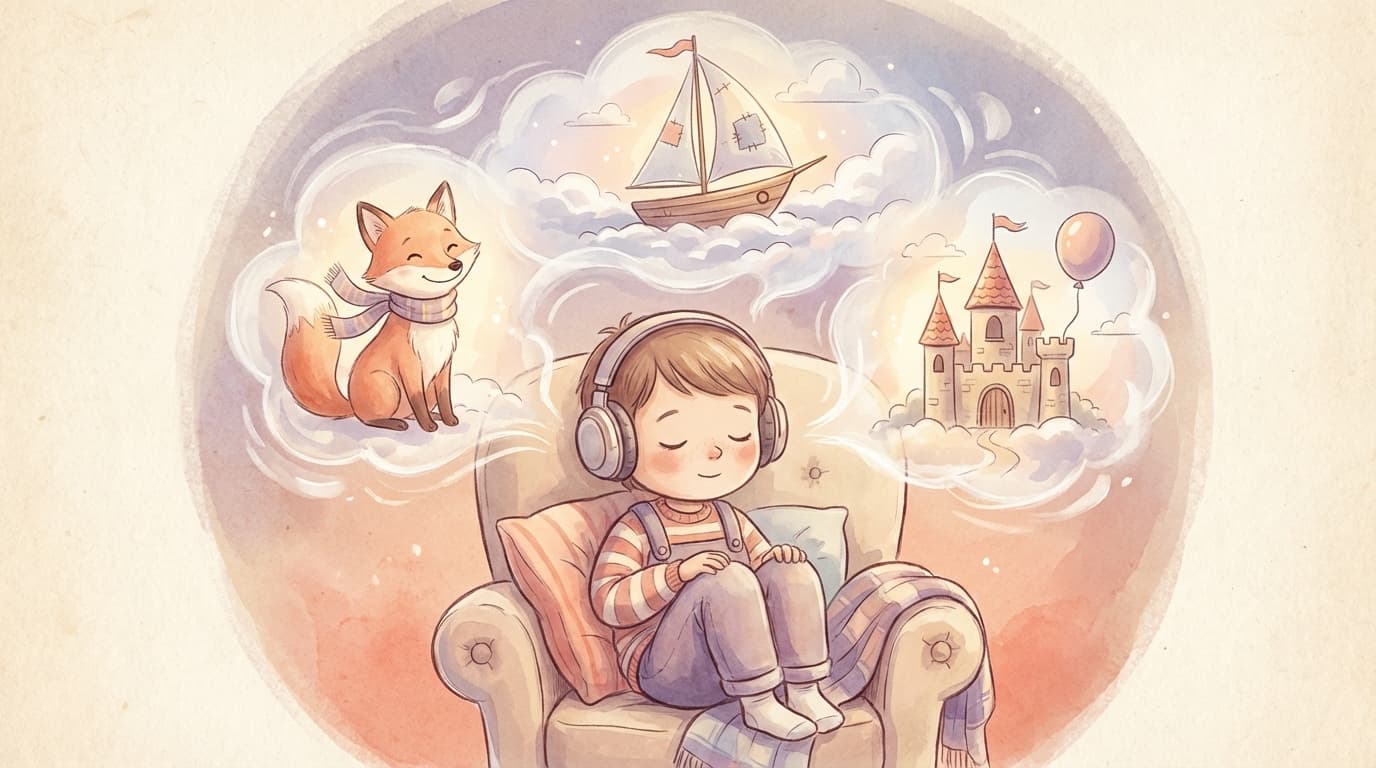
Audiobooks for children build vocabulary, improve listening comprehension, and develop a love of narrative — often reaching children who resist print books. Research consistently shows that the brain processes audio stories similarly to being read to by a parent, activating language and imagination regions simultaneously. Audiobooks are not a replacement for reading, but they are a powerful complement.
A 2019 study from the University of Trento, published in the Journal of Neuroscience, found that listening to stories and reading stories activated remarkably similar brain networks — including areas responsible for language processing, semantic understanding, and narrative comprehension. The delivery method mattered far less than the engagement with story.
Do Audiobooks Actually Build the Same Skills as Reading?
Audiobooks and print reading share many cognitive benefits but differ in important ways. Understanding the overlap and differences helps you use audiobooks strategically.
Skills audiobooks build effectively:
- •Vocabulary — Children hear words pronounced correctly in context, including words they wouldn't encounter in conversation
- •Listening comprehension — Processing spoken narrative is a critical academic skill tested throughout schooling
- •Narrative understanding — Story structure, character development, and theme recognition develop through listening
- •Fluency modeling — Professional narrators demonstrate pacing, expression, and emphasis that children internalize
- •Content knowledge — Audiobooks expose children to information above their independent reading level
The persistent myth that audiobooks are 'cheating' does real harm. For many children — especially those with dyslexia, visual processing issues, or English language learners — audiobooks are the most effective pathway to rich vocabulary and complex narrative. They are a legitimate and powerful literacy tool.
Skills that require print reading:
- •Decoding — Letter-sound correspondence can only be learned from written text
- •Spelling — Visual exposure to word patterns builds spelling knowledge
- •Print awareness — Understanding page layout, punctuation, and text structure
- •Independent reading stamina — The self-directed attention required for solo reading
Similar
brain activation patterns for audiobook listening and print reading
Source: University of Trento, Journal of Neuroscience, 2019
The optimal approach is using both. Audiobooks build the higher-level comprehension skills while print reading builds the mechanical skills. Together, they produce a more complete reader than either format alone.
At What Age Should Children Start Listening to Audiobooks?
Children can benefit from audiobooks from infancy, but the benefits and use cases change with age.
By age group:
- •
0-2 years: Music and simple audio stories during play or car rides. The rhythmic exposure to language builds phonological awareness. At this age, live reading is more impactful because of the interactive component, but audio is a useful supplement.
- •
3-5 years: Short picture-book-length audiobooks (5-10 minutes) with clear narration. Paired with the physical book (reading along while listening) is particularly powerful. A 2017 study from Brigham Young University found that preschoolers who listened to audiobooks while following along in print showed greater word recognition gains than either modality alone.
- •
6-8 years: Full chapter-book audiobooks during car rides, quiet time, or before bed. At this stage, children's listening comprehension far exceeds their reading level, so audiobooks give them access to richer stories than they could read independently.
- •
9-12 years: Longer, more complex audiobooks including multi-voice productions. Many children at this age develop an audiobook habit that supplements their print reading.
Audiobooks are particularly transformative for children ages 6 to 10 — the years when the gap between what a child can understand and what they can independently read is largest. An eight-year-old reading at a second-grade level can listen to and comprehend a fifth-grade story. That access matters enormously for intellectual development and motivation.
💡 The listen-and-follow technique
For children learning to read, playing an audiobook while they follow along in the print version is one of the most effective literacy interventions available. The audio provides correct pronunciation and fluent pacing while the child's eyes track the words, strengthening the connection between spoken and written language. Many libraries offer paired audiobook-and-print sets specifically for this purpose.
How Do Audiobooks Help Reluctant Readers?
For children who resist print books, audiobooks can be a back door into literacy. By removing the mechanical barrier of decoding, audiobooks let reluctant readers experience what stories actually offer: adventure, humor, emotion, and connection.
According to a 2022 survey by the Audio Publishers Association, 85% of teachers reported that audiobooks helped their struggling students engage with stories they would not have read independently. Among parents, 72% reported that audiobooks increased their children's interest in reading.
85%
of teachers say audiobooks help struggling readers engage with stories
Source: Audio Publishers Association, 2022
The mechanism is straightforward: when children hear great stories through audiobooks, they develop what literacy researchers call reading desire — the intrinsic want to consume more narrative. This desire then transfers to print. A child who devours the Harry Potter audiobooks is far more likely to pick up the physical books than a child who has never experienced the story at all.
How to use audiobooks as a bridge to print:
- •Start with audiobook-only listening to build love of story
- •Introduce the print version of an audiobook they already love
- •Use the "listen-and-follow" method described above
- •Let them alternate between formats based on context (audio in the car, print at bedtime)
- •Never frame audiobooks as inferior — "you're listening to a book" is reading, not cheating
Ready to create your child's story?
Turn your child into the hero of a 30-page illustrated hardcover book. Upload a photo and see the magic.
Are Audiobooks Better or Worse Than Parent Read-Alouds?
Different — not better or worse. Each has unique advantages.
Advantages of parent read-alouds:
- •Interactive dialogue — You can pause, ask questions, and connect the story to your child's life
- •Emotional bonding — Physical closeness and shared attention build attachment
- •Customization — You can adapt pacing, vocabulary, and emphasis to your child's needs
- •Responsiveness — You can tell when they're confused, excited, or losing interest
Advantages of audiobooks:
- •Professional performance — Narrators bring vocal range, accents, and dramatic skill that most parents can't match
- •Consistency — Same quality every time, regardless of parent's energy or mood
- •Accessibility — Available when parents aren't (car rides, independent time, rest)
- •Complex production — Full-cast recordings with music and sound effects create immersive experiences
- •Stamina — Narrators can sustain chapter-length reading without fatigue
The ideal is both. Parent read-alouds provide the irreplaceable bonding and interaction. Audiobooks extend reading exposure into times and contexts when parent reading isn't possible.
📖 Audiobooks included with every Sherly book
Every Sherly personalized book comes with a digital version and a professionally narrated audiobook — included with your hardcover purchase. Your child can follow along with the physical book while listening to their personalized story read aloud, combining the benefits of both formats. It's the "listen-and-follow" technique with a story where they're the hero.
What About Podcast Stories for Children?
Narrative podcasts for children function similarly to audiobooks and offer many of the same benefits. High-quality options include:
- •"Stories Podcast" — Classic and original stories for ages 3-10, released weekly
- •"Circle Round" — Folktales from around the world, adapted for ages 4-10
- •"But Why: A Podcast for Curious Kids" — Q&A format that builds critical thinking
- •"The Alien Adventures of Finn Caspian" — Serialized sci-fi adventure for ages 5-10
- •"Brains On!" — Science podcast with narrative storytelling for ages 5-12
According to a 2023 Edison Research report, 46% of children ages 6-12 have listened to a podcast in the past month. The serialized format creates anticipation and routine — children look forward to new episodes in the same way they anticipate the next book in a series.
Podcast stories serve the same developmental function as audiobooks with one added benefit: the serialized release schedule builds anticipation and routine. Children who check weekly for a new episode are developing the same 'what happens next?' craving that drives voracious readers.
How Do I Choose Good Audiobooks for My Child?
Not all audiobooks are created equal. Quality narration makes an enormous difference in engagement and comprehension.
What to look for:
- •Professional narration — Expressive, clearly enunciated, with appropriate pacing
- •Full-cast recordings — Multiple voices for different characters enhance comprehension
- •Appropriate length — Match to your child's attention span (start shorter, build up)
- •Stories they already love — Hearing a favorite book read professionally is delightful
- •Award winners — The Audie Awards and Odyssey Award recognize outstanding children's audiobooks
Where to find them:
- •Libby/OverDrive — Free through most public libraries
- •Audible — Large catalog with a kids section
- •Spotify — Growing audiobook library included with subscription
- •Epic! — Subscription service with thousands of children's audiobooks
- •Scribd — Unlimited audiobook access with subscription
46%
of children ages 6-12 have listened to a podcast in the past month
Source: Edison Research, 2023
Frequently Asked Questions
Sherly Team
Children's Reading Specialists