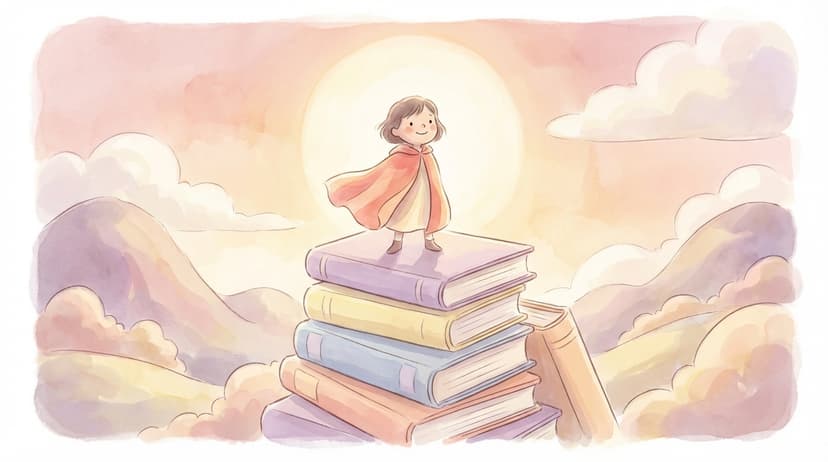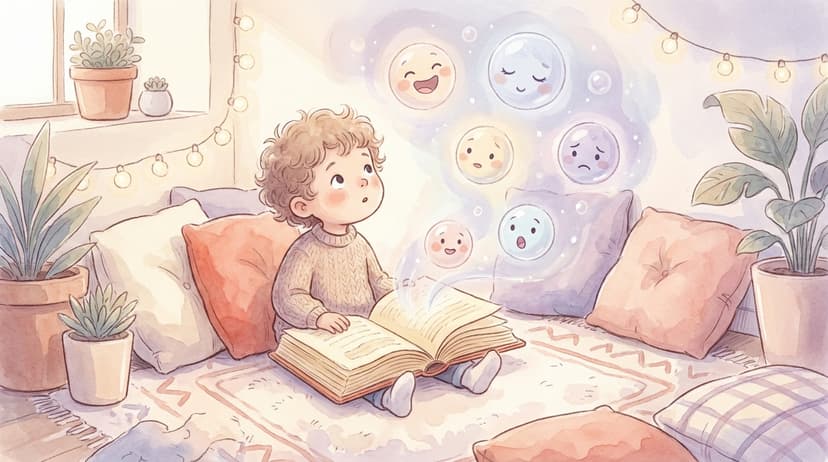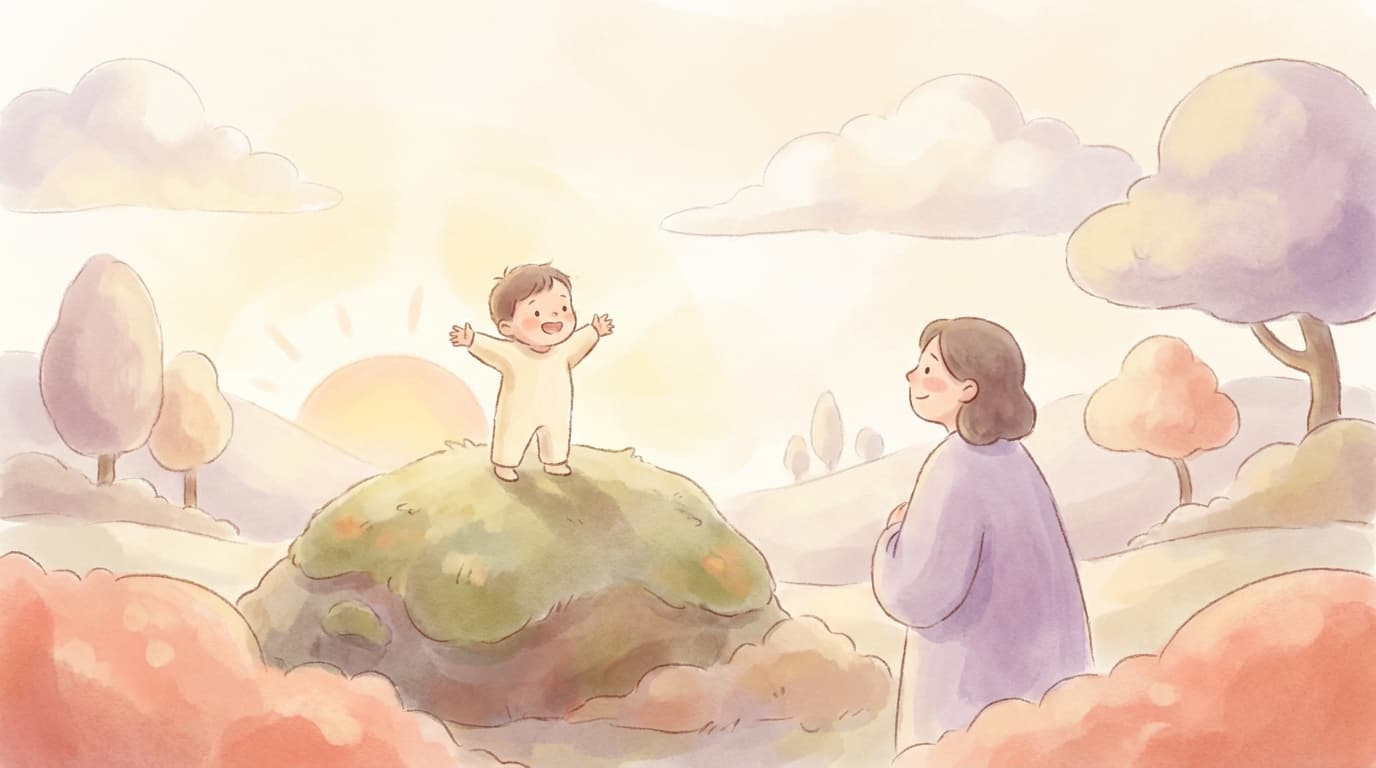
Raising resilient children does not mean exposing them to hardship and hoping they get tougher. The American Psychological Association defines resilience as "the process of adapting well in the face of adversity, trauma, tragedy, threats, or significant sources of stress." Decades of research point to the same conclusion: resilience grows from connection, not from struggle alone. It's built through secure relationships, a child's sense of mastery, and the stories they tell about who they are.
That last part — the stories — may surprise you. But a landmark study from Emory University found that children who know their family's narrative are measurably more resilient. We'll get to that. First, let's look at what the science identifies as the core building blocks.
What Are the Key Protective Factors for Resilience?
The Harvard Center on the Developing Child has spent over two decades studying what helps children thrive despite adversity. Their research identifies three core protective factors that predict resilience across cultures, income levels, and family structures:
1. At least one stable, caring relationship with an adult. This is the single most important factor. Not five adults. Not a perfect parent. One consistent, responsive person who makes the child feel safe and seen. This relationship acts as a buffer against the physiological effects of stress.
2. A sense of mastery and self-efficacy. Children who believe they can affect outcomes — who have experienced "I tried, and it worked" — handle setbacks differently. They approach problems as solvable rather than permanent.
3. Strong executive function and self-regulation skills. The ability to plan, focus attention, remember instructions, and manage impulses. These cognitive skills help children pause between a stressor and their response. They can be trained, and they improve with practice.
Resilience is born from the interplay between the hardships children face and the support available to them. The single most common factor among children who develop resilience is at least one stable, committed relationship with a supportive parent, caregiver, or other adult.
Notice what's missing from that list. Nowhere does the research say children need to be left alone with their problems. Nowhere does it prescribe "tough love." The science is clear: the raw material of resilience is relational safety.
1 in 3
children exposed to significant adversity develop strong resilience — and the deciding factor is the presence of a supportive adult relationship, not the child's innate temperament
Source: Harvard Center on the Developing Child, 2023
Is the "Let Them Struggle" Approach Wrong?
Partly. The myth goes like this: if you want strong kids, step back and let them figure it out. Don't comfort too much. Don't intervene. Struggle builds character.
Here's what the research actually shows. There's a critical difference between supported challenge and unsupported hardship.
Supported challenge looks like a child working on a difficult puzzle while a parent sits nearby, available but not solving it for them. The child feels frustrated. The child also feels safe. When they eventually succeed — or when they ask for help and receive it — they learn two things: I can handle hard things and people are there for me when I need them.
Unsupported hardship looks like a child facing a problem with no safety net. No one to turn to. No one watching. The child may push through, but the lesson they learn is different: I'm on my own. That's not resilience. That's survival. And survival mode comes with a physiological cost.
A 2024 longitudinal study from the University of Minnesota tracked 267 children over 15 years. Children who experienced adversity with strong parental support showed resilience outcomes comparable to children who experienced no adversity at all. Children who experienced adversity without support showed elevated cortisol levels, higher anxiety, and lower academic achievement well into adolescence.
The takeaway: challenge is fine. Necessary, even. But the container matters. Your child needs to struggle while knowing you're there. Not instead of knowing you're there.
We have confused resilience with rugged individualism. Children don't develop resilience by being left to fend for themselves. They develop it by internalizing the security of a caring relationship — and then carrying that security into difficult moments.
How Does Narrative Identity Build Resilience?
This is one of the most compelling — and least discussed — findings in resilience research.
In the early 2000s, psychologists Marshall Duke and Robyn Fivush at Emory University developed a simple assessment called the "Do You Know?" scale. They asked children 20 questions about their family history:
- •Do you know where your grandparents grew up?
- •Do you know where your parents met?
- •Do you know about an illness or something terrible that happened in your family?
- •Do you know the story of your birth?
Children who scored higher — who knew more about their family's story — showed higher self-esteem, lower anxiety, fewer behavioral problems, and greater resilience when faced with stress. The correlation was strong and consistent.
Then something unexpected happened. The researchers conducted a follow-up after September 11, 2001. Children who knew their family narrative recovered from the emotional impact of that national trauma faster and more completely than children who didn't.
Up to 40%
higher resilience scores in children who knew their family's narrative — including stories of hardship and recovery — compared to children who did not
Source: Emory University, Duke & Fivush, 'Do You Know?' Scale Research
Why does knowing your family's story make you more resilient? Because it gives children what Duke and Fivush call an intergenerational self. The child understands that they belong to something larger than themselves. That their family has faced hard times before — and came through. That struggle is part of the story, not the end of it.
The most resilient children had what the researchers call an oscillating family narrative — a story that includes both highs and lows. Not "everything was always great" (which rings false) and not "everything was always terrible" (which breeds hopelessness). Instead: "We've had good times and hard times. We stuck together. We came through."
This is why storytelling matters for resilience in ways that go far beyond entertainment. When you read stories with your child — especially stories where the hero faces difficulty and perseveres — you're building narrative scaffolding they'll use to interpret their own life.
How Does Reading Together Build All Three Protective Factors?
Reading together is one of the few daily activities that strengthens all three protective factors simultaneously. Here's how:
It strengthens your relationship. The physical closeness of reading — a child in a lap, a shared blanket, eyes on the same page — activates oxytocin in both parent and child. A 2024 study from the National Literacy Trust found that children who had a daily reading ritual with a caregiver rated their relationship security 28% higher than children without one. Reading isn't just about the book. It's about the reliable, warm presence of you.
It builds mastery and self-efficacy. Every time a child follows a story, predicts what happens next, turns the page, or — in personalized books — sees themselves as the hero who solves a problem, they experience a small win. These accumulate. A child who has read hundreds of stories about characters who face challenges and find a way forward begins to believe they can find a way forward too.
It trains executive function. Listening to a story requires sustained attention, working memory (tracking characters and plot), and impulse control (waiting to find out what happens). A 2023 meta-analysis in Developmental Psychology found that children read to daily for 15+ minutes showed executive function scores 23% higher than age-matched peers. These same skills help children regulate emotions and manage stress — the core of resilience.
📖 Stories where your child is the resilient hero
Sherly creates personalized storybooks where your child's photo becomes custom illustrations across 30 pages. When your child sees themselves facing a challenge in the story — and coming through it — they're building narrative identity in real time. They're learning "I am someone who can handle hard things." That belief, rooted in story, becomes a resource they carry into real moments of difficulty.
What Daily Habits Build Resilience?
Resilience isn't built in a single conversation or during a crisis. It's built in the small, repeated moments of everyday life. Here are the habits that research supports:
1. Read together every day. Even 10-15 minutes. Choose stories where characters face obstacles and work through them. Pause to ask: "What do you think the character is feeling?" and "What would you do?" These conversations build emotional intelligence alongside resilience.
2. Tell your family's story. Share age-appropriate stories about your own childhood, your parents' lives, and your family's journey. Include the hard parts. "When Grandma moved to this country, she didn't know anyone. It was scary. But she found friends, and she built a life." This builds the intergenerational self that Emory's research links to resilience.
3. Name emotions without fixing them. When your child is upset, resist the urge to make it better immediately. Instead: "You're feeling really disappointed that the playdate got canceled. That makes sense." Naming the emotion activates the prefrontal cortex and begins the regulation process. Fixing the feeling too fast teaches children that negative emotions are emergencies.
4. Let them solve problems — with you nearby. Offer the smallest amount of help necessary. Instead of zipping their jacket, say "You've almost got it — try pulling the two sides together first." Instead of mediating every sibling conflict, ask "What do you think would be fair?" Mastery comes from doing, not from watching someone else do.
5. Model your own resilience out loud. Children learn more from watching you handle frustration than from any lesson. Narrate your process: "I'm feeling frustrated that this didn't work out. I'm going to take a break and try again tomorrow." This teaches them that adults feel difficult emotions too — and that there are strategies for managing them.
6. Build a bedtime reading ritual. Consistent routines create safety. The predictability of a bedtime story signals to a child's nervous system that the world is orderly and they are cared for. A 2024 study from the American Academy of Pediatrics found that children with consistent bedtime routines showed lower cortisol levels and higher emotional regulation scores than children without.
The most powerful thing parents can do for resilience is deceptively simple — be a steady, warm presence. Show up consistently. Read with them. Tell them where they come from. Let them know that hard feelings are normal, not dangerous. Resilience isn't extraordinary. It's ordinary magic.
What Role Does Self-Esteem Play in Resilience?
Resilience and self-esteem are deeply connected but not identical. Self-esteem is about how a child values themselves. Resilience is about how they respond when things go wrong. Healthy self-esteem makes resilience more likely — a child who believes "I am capable and worthy" has a foundation to stand on when the ground shakes.
But self-esteem alone isn't enough. A child also needs coping strategies, emotional vocabulary, and the belief that difficulty is temporary and manageable — not a reflection of their worth.
This is where positive self-talk and affirmations play a role. Children who have internalized messages like "I can do hard things" and "Mistakes help me learn" respond to setbacks with problem-solving rather than shame. These beliefs don't emerge on their own. They're planted through stories, repeated through conversation, and reinforced through experience.
73%
of children who demonstrated high resilience also scored in the top quartile for self-esteem — but only when self-esteem was rooted in mastery experiences rather than external praise alone
Source: American Psychological Association, Resilience Task Force Report, 2024
The type of self-esteem matters. Praise-dependent self-esteem ("I'm good because people say so") crumbles under pressure. Mastery-based self-esteem ("I'm good because I've handled hard things before") holds. Stories that show your child as a capable hero build the second kind.
What If My Child Is Already Struggling?
If your child is showing signs of low resilience — frequent meltdowns, avoidance of anything difficult, "I can't" as a default response, extreme anxiety about new situations — know this: resilience is not fixed. It can be built at any age.
Start with the relationship. Before strategies, before books, before habits — make sure your child feels safe with you. That means responding to their distress with warmth, not frustration. It means validating their feelings before trying to change them.
Then, gradually:
- •Introduce stories with resilient characters. Not superheroes who are invincible, but ordinary characters who feel scared and try anyway. The distinction matters. Invincibility isn't resilience. Vulnerability plus perseverance is.
- •Create small wins. Give your child tasks they can succeed at with effort. Build from there. Each mastery experience deposits into their resilience account.
- •Share your family's oscillating narrative. "We've had hard times. We came through." Let them know they come from people who kept going.
- •Seek support if needed. If anxiety or behavioral challenges are significant, a child psychologist can help. Asking for help is itself a model of resilience.
Ready to create your child's story?
Turn your child into the hero of a 30-page illustrated hardcover book. Upload a photo and see the magic.
Frequently Asked Questions
Sherly Team
Children's Reading Specialists