Building self-esteem in young children starts with consistent, everyday actions — not grand gestures. Experts agree that the foundation of healthy self-esteem is built between ages 2 and 8 through a combination of unconditional love, appropriate challenges, process-focused praise, and opportunities for children to see themselves as capable. The good news: small daily habits have an outsized impact.
According to the American Psychological Association, self-esteem in children is not something you teach — it's something you cultivate through environment and interaction. A 2024 longitudinal study from the University of Washington found that children whose parents used specific esteem-building strategies showed 41% higher self-worth scores by age 10 compared to peers whose parents relied on generic praise or rewards.
What Actually Builds Self-Esteem in Children?
Self-esteem isn't built by telling a child they're special. It's built by helping them experience their own competence. Psychologist Susan Harter's research identifies five domains that contribute to a child's overall self-esteem:
- •Scholastic competence — Feeling capable at learning
- •Athletic competence — Feeling capable physically
- •Social acceptance — Feeling liked by peers
- •Physical appearance — Feeling okay with how they look
- •Behavioral conduct — Feeling they can make good choices
A child doesn't need to excel in all five. But they need to feel adequate in the domains they care about most. A 2023 study in Self and Identity found that self-esteem was most strongly predicted not by objective performance, but by the gap between a child's perceived competence and their aspirations in personally important domains.
Self-esteem isn't about being the best. It's about feeling adequate in the areas that matter to you. A child who loves art and feels confident in their drawing has higher self-esteem than a child who wins every race but doesn't care about sports.
This means the most effective esteem-building approach is personalized — understanding what matters to your specific child and supporting their competence in those areas.
Does the Type of Praise Matter for Self-Esteem?
Enormously. The research on praise and self-esteem is one of the most robust findings in developmental psychology, and the message is clear: how you praise matters far more than how much.
38%
difference in persistence after failure between children who received process praise versus person praise
Source: Columbia University Motivation Science Center, 2024
Dr. Carol Dweck's groundbreaking work at Stanford distinguishes between two types of praise:
- •Person praise ("You're so smart!" / "You're such a good artist!") — Ties identity to performance. When the child eventually fails, their identity feels threatened.
- •Process praise ("You worked really hard on that!" / "I noticed you tried three different approaches!") — Ties identity to effort and strategy. Failure becomes information, not an identity crisis.
A 2024 study from Columbia University found that children aged 4-7 who received consistent process praise were 38% more likely to persist after failure and showed 22% higher self-esteem scores at six-month follow-up compared to children who received person praise.
Practical swap examples:
- •Instead of: "You're so smart" → Try: "You figured that out by thinking carefully"
- •Instead of: "Good girl/boy" → Try: "You made a kind choice"
- •Instead of: "You're the best at this" → Try: "You've been practicing and it shows"
- •Instead of: "Perfect!" → Try: "I can see how much effort you put into this"
Person praise feels good in the moment but creates fragile self-esteem. Process praise builds the kind of robust self-worth that can weather setbacks. The goal is a child who thinks 'I can figure things out,' not 'I am smart.'
How Do Stories and Books Build Self-Esteem?
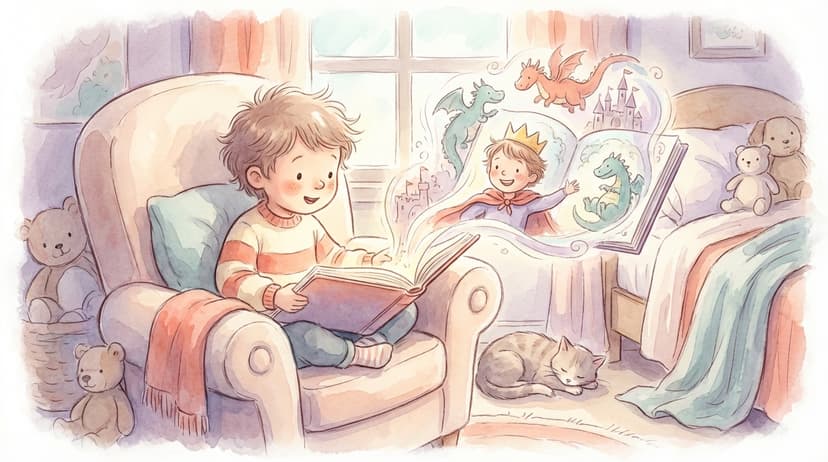
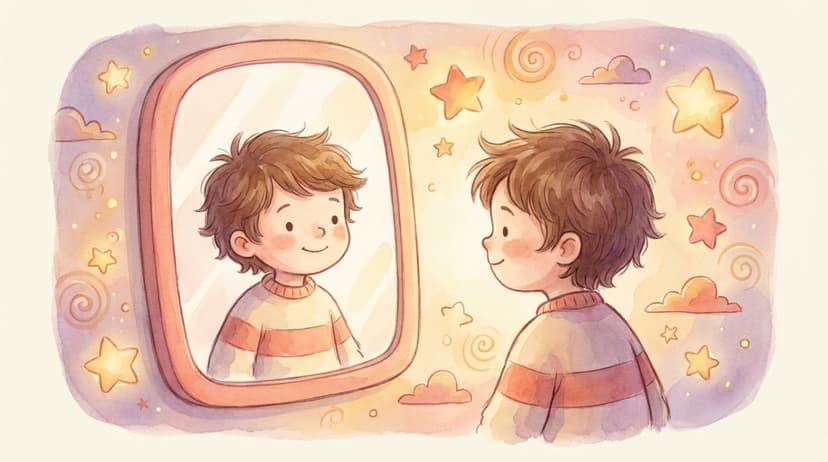
Stories are one of the most underutilized tools for building self-esteem — and one of the most effective. Reading serves as both a mirror (reflecting who the child is) and a rehearsal space (showing who they could be).
A 2023 study from the University of Sussex found that children who read stories featuring protagonists they identified with showed a 26% increase in self-concept scores over a six-month period. The effect was strongest when the protagonist:
- •Looked like the child
- •Shared the child's name
- •Faced and overcame a relatable challenge
- •Demonstrated qualities the child valued
📖 Books that build self-esteem
Sherly creates personalized storybooks where your child's photo becomes custom illustrations across 30 pages. When children see themselves as the hero — literally — they internalize the message that they are brave, capable, and worthy of their own story. It's self-esteem building in hardcover form.
The mechanism works through narrative identity. When a child hears a story about a character like them who is brave, the child's brain doesn't fully distinguish this from a personal experience of being brave. Over time, these narrative experiences accumulate into a stable self-concept.
Stories also provide emotional vocabulary. Children with larger emotional vocabularies — who can name feelings like "frustrated," "proud," "determined" — show higher self-esteem because they can process experiences more effectively. Reading expands this vocabulary naturally.
What Are the Biggest Mistakes Parents Make with Self-Esteem?
Well-meaning parents can inadvertently undermine self-esteem through common mistakes:
Over-praising. When everything is "amazing" and "perfect," praise loses meaning. A 2024 study from Utrecht University found that children who received inflated praise ("You made an incredibly beautiful drawing!") were less likely to take on challenges afterward, particularly if they already had low self-esteem.
40%
less likely to take on challenges after receiving inflated praise, in children with pre-existing low self-esteem
Source: Utrecht University Department of Psychology, 2024
Rescuing too quickly. When parents solve problems their child could handle, the implicit message is "I don't think you can do this." Allowing age-appropriate struggle builds what psychologists call mastery experience — the single strongest source of self-efficacy.
Comparing to siblings or peers. Comparison — even favorable comparison ("You're smarter than your brother") — teaches children that worth is relative. Self-esteem needs to be intrinsic.
Ignoring feelings. Saying "You're fine" or "Don't be sad" teaches children their emotions are wrong. Validating emotions — "It makes sense that you feel disappointed" — builds emotional self-trust, a core component of self-esteem.
Focusing only on achievement. Children need to feel valued for who they are, not just what they do. Unconditional positive regard — love that isn't contingent on performance — is the bedrock.
What Do Child Psychologists Recommend Daily?
Experts consistently recommend these daily practices for building lasting self-esteem:
1. Give specific, genuine feedback. Not "Good job" but "I noticed you shared your toy with your friend even though you wanted to keep playing with it. That was thoughtful."
2. Offer age-appropriate choices. Letting a child choose between two outfits or two snacks builds autonomy. A 2023 study from Yale's Child Study Center found that children given regular choices showed 29% higher perceived control — a key self-esteem predictor.
3. Read together daily. Especially books where the child can see themselves in the protagonist. The shared experience of reading also builds secure attachment, which is the foundation all self-esteem is built on.
4. Allow productive struggle. When your child is working on a puzzle or trying to zip their jacket, resist the urge to do it for them. Narrate instead: "You're working on it. I see you trying."
5. Name and validate emotions. "You seem frustrated that the tower fell down. That makes sense — you worked hard on it." This builds emotional intelligence alongside self-esteem.
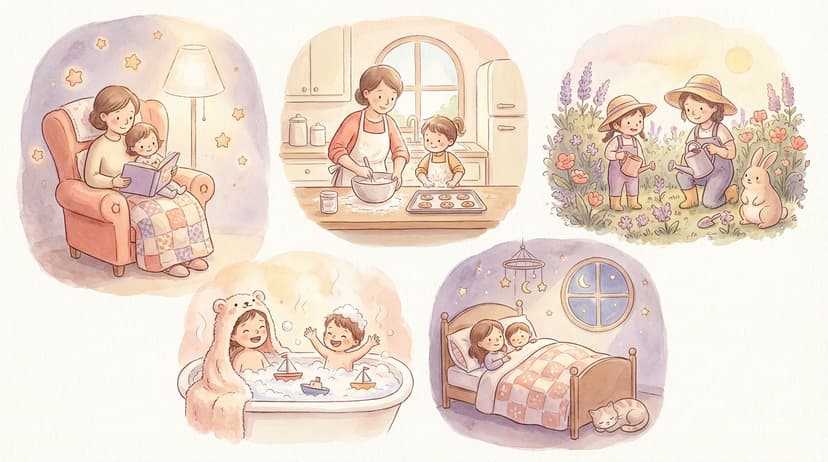
The single most important thing you can do for your child's self-esteem is to be a warm, consistent presence who communicates — through words and actions — that they are loved for who they are, not what they achieve.
6. Create a bedtime reading ritual. The combination of physical closeness, focused attention, and story content makes bedtime reading a powerful self-esteem moment. A 2024 report from the National Literacy Trust found that children with a consistent bedtime reading routine had 32% higher self-worth scores than those without.
Ready to create your child's story?
Turn your child into the hero of a 30-page illustrated hardcover book. Upload a photo and see the magic.
How Can You Tell If Your Child Has Healthy Self-Esteem?
Healthy self-esteem isn't about constant confidence. It's about resilience — the ability to bounce back, try again, and maintain a fundamentally positive self-view even after setbacks.
Signs of healthy self-esteem in children:
- •Willingness to try new things — Even with uncertainty
- •Ability to handle mistakes — Gets frustrated but recovers
- •Positive self-talk — Says "I can try" rather than "I can't"
- •Comfort with being themselves — Doesn't need constant approval
- •Empathy for others — Can think about others' feelings (this requires a secure sense of self first)
Signs that self-esteem may need support:
- •Persistent "I can't" or "I'm stupid" statements
- •Avoiding new activities or giving up immediately
- •Excessive need for reassurance or external validation
- •Blaming others for mistakes (a defense mechanism against shame)
- •Harsh self-criticism that seems disproportionate
1 in 5
children experience clinically significant self-esteem issues by age 8, but early intervention through positive parenting practices can reverse the trajectory
Source: American Academy of Pediatrics, 2024
If you notice concerning patterns, know that self-esteem is malleable. The same strategies outlined above — process praise, choices, productive struggle, representative stories, and unconditional warmth — can rebuild what feels broken.
What's the Connection Between Self-Esteem and Reading?
Reading and self-esteem exist in a reinforcing loop. Children with healthy self-esteem are more willing to try reading (even when it's hard). Children who read regularly develop skills and knowledge that boost their self-esteem. The loop feeds itself.
A 2024 study from the University of Michigan found that early reading confidence was the single strongest predictor of overall self-esteem at age 8 — stronger than athletic ability, social popularity, or appearance satisfaction.
This makes sense: reading is the gateway to academic success, and academic competence is one of the five domains of self-esteem. But it goes deeper than grades. Reading gives children agency — the ability to learn independently, explore ideas, and find stories that validate their experience.
Personalized books accelerate this loop. When a child's first reading experiences feature themselves as the hero, reading becomes intrinsically rewarding from the start. There's no need to convince them that books are for them — the book already proves it.
Frequently Asked Questions
Sherly Team
Children's Reading Specialists