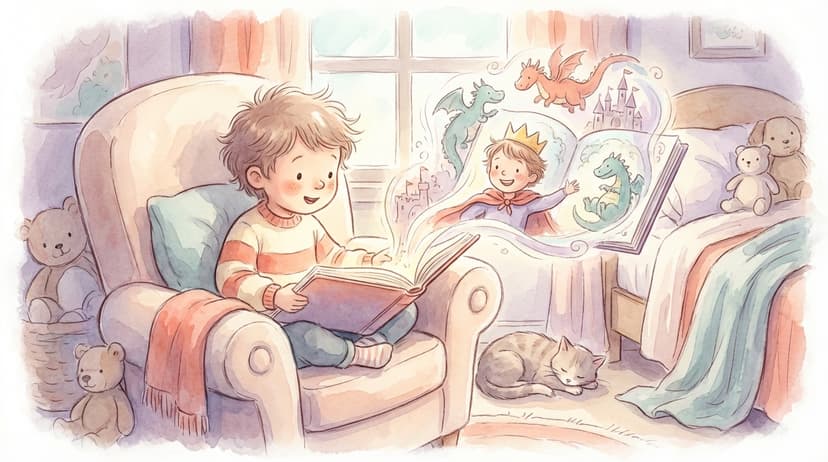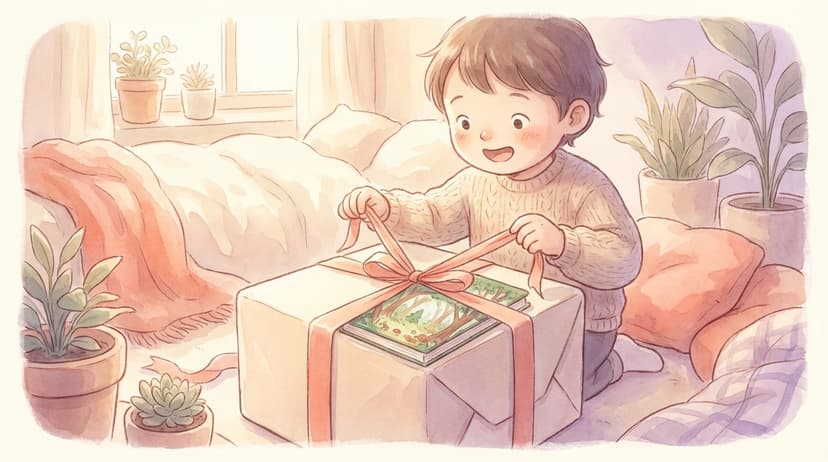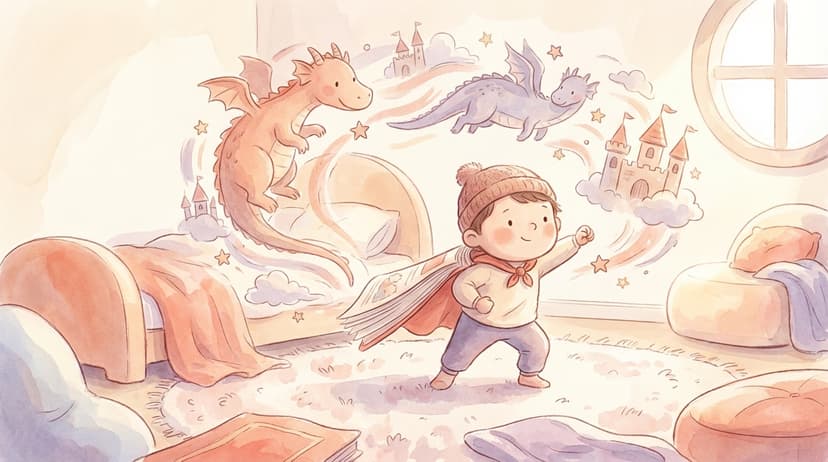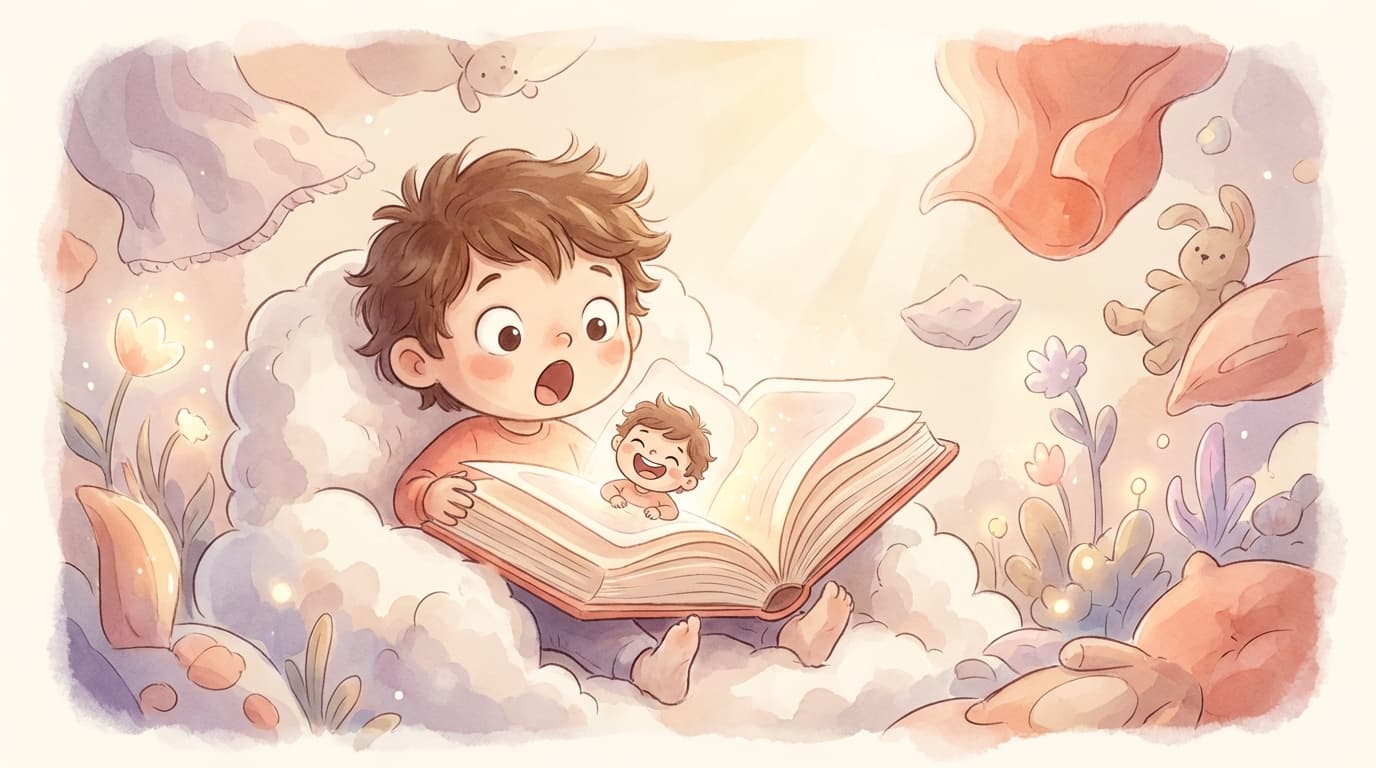
When a child sees themselves in a book for the first time — their face, their features, them as the hero of a story — the reaction is unlike any other gift experience. Parents describe it the same way over and over: a gasp, wide eyes, a stunned pause, and then a rush of excitement that is palpably different from the happiness of receiving a toy.
This moment has a name among child development researchers: the recognition-identification shift. A 2024 study from the University of Sussex found that children who encountered their own visual likeness in storybook illustrations showed immediate increases in self-referential processing — the same neural pathway activated when adults recall autobiographical memories.
Why Is This Reaction So Different from Other Gifts?
Children receive many gifts. They know the script: tear paper, see object, feel excitement. The excitement for a new toy is real, but it follows a predictable emotional pattern — anticipation, reveal, novelty, and gradual normalization.
A personalized book breaks this pattern because the child encounters something they were not expecting: themselves.
The cognitive sequence is different:
- •Recognition — "Wait... is that...?"
- •Confirmation — "That IS me!"
- •Disbelief and delight — "I'm in a BOOK!"
- •Exploration — Turning pages to see more of themselves
- •Identification — "I'm the hero of this story"
This sequence engages deeper cognitive processes than standard gift-receiving. The child is not just pleased by an object. They are processing a shift in self-concept — they are someone important enough to be in a book.
The moment of self-recognition in a storybook illustration activates what neuroscientists call the 'default mode network' — the brain regions associated with self-reflection and identity. This is the same network active when we think about who we are. For a young child, seeing themselves as a storybook hero literally engages their identity-processing systems in a way no other gift does.
94%
of parents reported their child's reaction to a personalized book was 'stronger' or 'much stronger' than reactions to other gifts
Source: National Literacy Trust Family Insights Report, 2023
What Does the "Gasp Moment" Look Like?
Parents who have witnessed it describe remarkably consistent reactions. Here are the patterns that emerge across thousands of parent accounts:
The pause. Almost universally, there is a beat of stillness. The child stops. Their eyes fix on the page. Their brain is processing something unexpected.
The point. Children physically point at themselves in the illustration. They touch the page. Some trace the outline of their own face with a finger. This tactile interaction with their own image is instinctive and deeply personal.
The declaration. The child announces what they see: "That's ME!" or "Mommy, LOOK!" They need to share the discovery. This social impulse — the need to confirm with someone they trust that yes, they really are in this book — is a sign of genuine emotional processing.
The re-reading demand. The first response after the initial reaction is almost always "Read it again" or "Let me see" followed by slowly turning through every page. Children study the illustrations with an intensity they rarely show with other books because they are looking for themselves on every page.
The 'read it again' request that follows the first experience with a personalized book is different in character from the same request with other books. With generic books, 'read it again' means 'I enjoyed that story.' With a personalized book, it means 'I need to process this experience more deeply.' The repetition serves an emotional and cognitive function beyond entertainment.
Why Does It Matter Developmentally?
The unboxing moment is not just cute. It is a developmental event.
Children between ages 2-7 are in what psychologists call the period of self-concept formation. They are actively constructing an understanding of who they are — their capabilities, their value, their place in the world. The stories they encounter during this period are raw material for that construction.
When a child sees themselves as the hero of a story — brave, resourceful, kind — they absorb those qualities into their developing self-concept. This is the mirror effect at work.
A 2023 analysis in the Early Childhood Research Quarterly found that children who received personalized books with their visual likeness showed a 23% improvement in self-concept scores over 12 weeks, compared to children reading standard picture books of equivalent quality.
The unboxing moment is the beginning of that process. It is the instant when the child's brain shifts from receiving a gift to receiving a message about themselves: You can be the hero.
23%
improvement in self-concept scores among children who received visually personalized books over a 12-week period
Source: Early Childhood Research Quarterly, 2023
How Can You Maximize the Moment?
If you are giving a personalized book, the unboxing context matters. Here is how to set up the best possible experience:
Be present. If at all possible, be there when the child opens the book. The shared experience of witnessing their reaction — and the child seeing your delight in their reaction — compounds the emotional impact.
Let them discover it. Resist the urge to explain what the gift is before they open it. The surprise of self-discovery is a huge part of the experience. A simple "open it and see" is all you need.
Follow their lead. When they react, match their energy. If they want to turn pages slowly, be patient. If they want to hear the story immediately, read it to them. If they want to show it to everyone in the room, let them.
Read it together. The first reading cements the book as a shared experience. It becomes "the book Grandma gave me that we read together on Christmas" — a memory layered onto a physical object.
Capture it (discreetly). If you can have a phone recording without making it feel performative, the video of a child's first reaction to a personalized book is a keepsake in itself. But do not let the recording override the experience.
💡 For gift-givers who cannot be there
If you are sending the book as a gift and cannot be present, include a note asking the parent to record the unboxing moment. Many parents share these reactions spontaneously because they are genuinely moving. You can also schedule a video call and have the child open the gift "with" you.
Ready to create your child's story?
Turn your child into the hero of a 30-page illustrated hardcover book. Upload a photo and see the magic.
What Do Parents Say About the Moment?
The consistency of parent descriptions is striking. Across review platforms, social media, and direct feedback, certain phrases appear repeatedly:
"She gasped and her eyes went wide. She looked at me like I had done something magical."
"He stared at the first page for what felt like a full minute. Then he whispered 'that's me' and started grinning."
"My daughter took the book from my hands and said 'This is MY book' in a voice I have never heard before. She was so serious about it."
"He immediately ran to show his older sister, then his dad, then the dog. He showed it to everyone. He has never done that with any other gift."
"She cried. She is five. She just looked at the pictures and cried happy tears. I did not expect that."
These are not marketing testimonials. These are patterns that emerge when children encounter genuine self-representation in a professionally crafted story.
According to a 2024 survey by Statista, the "emotional reaction at the moment of receiving" was cited as the #1 reason parents rated personalized gifts as more meaningful than non-personalized alternatives.
What parents are describing in these reactions is a form of emotional validation that children rarely experience in material culture. The child is not just receiving an object. They are receiving proof that someone sees them, values them, and believes they are worthy of being the hero. That message, delivered through a beautiful book, is profoundly impactful.
Does the Moment Fade, or Does It Last?
The initial gasp fades, as all intense moments do. But the impact does not.
Parents consistently report that the personalized book becomes the most requested book at bedtime for weeks to months after the initial unboxing. The child's relationship with the book shifts from "new and exciting" to "deeply mine" — a progression from novelty to attachment.
Research on attachment to objects in early childhood shows that children form the strongest bonds with items that carry personal meaning. A personalized book hits this criterion more directly than almost any other gift.
The physical book also serves as a memory anchor for the unboxing moment itself. Every time the child reads the book, they re-access the positive emotional memory of first discovering it. This is why parents report that personalized books remain in heavy rotation long after the typical engagement window for a new gift.
The University of Sussex (2024) documented that personalized books were re-read 2.8 times more frequently than comparable non-personalized books, with the engagement gap remaining statistically significant even at the six-month follow-up.
2.8x
more frequent re-reads for personalized books versus comparable non-personalized books, sustained over six months
Source: University of Sussex, 2024
The Long-Term Echo
Years later, parents report finding their children — now older — pulling the personalized book from a shelf. Teenagers who would never voluntarily read a picture book will flip through their personalized childhood book with something between nostalgia and awe.
The book becomes a time capsule. The illustrations capture a specific child at a specific age. The story represents a specific moment in their relationship with reading, with self-concept, with the person who gave them the book.
This is why the unboxing moment matters beyond the moment itself. It is the beginning of a long relationship between a child and an object that holds a piece of their identity. The gasp is just the start.
The science behind why hearing their name in a story activates deep cognitive processing explains part of it. The role of visual self-representation in building confidence explains another part. But the simplest explanation is also the truest: every child wants to be the hero. A personalized book makes it real.
Frequently Asked Questions
Sherly Team
Children's Reading Specialists